Flash Fiction: The Coat, Part 2

Part 1 can be found here!

Krober Pass was a few hours west of Halftown, a narrow, rocky pass through the Reeven Mountains.  In years past, it had been part of a major trade route to the west, to the Kingdom of Marrowdowns, but the kingdom had fallen to goblin raids decades ago, and the goblins were pushing further and further east with every year.  That they’d reached the Krober Pass – so close to the adventurer’s haven of Halftown! – was a sign that things in Marrowdowns were bad.

But it also meant there was plenty of work for folks like Valeria and Garric.  The two adventurers were more than a match for anything the goblins could throw at them.  Valeria didn’t take any chances, though, performing a ballad designed to improve their endurance and damage resistance before they entered the pass.

Things were quiet as they entered the Krober Pass, the only sound the wind as it whistled through the rocks and thin grass.  Valeria had her axe ready, and Garric’s daggers were loose in their sheaths, ready to be deployed at the first sign of trouble.  The two had worked together for so many years, there was no need for conversation between them as they moved through the pass.  Valeria took point, twirling the axe in her hands and humming an old song under her breath that her mother had taught her years ago.

The only warning they had was the faint sound of rocks skipping down the rock wall, dislodged from above by an unseen foot.  Valeria pivoted on her heel, bringing the axe around in a wide arc.  The blade caught the first goblin raider under his arms, cleaving him in half and spraying hot blood across the rocks.  The short, knocked blade the goblin had held over his head clattered to the ground from nerveless fingers.

Suddenly, the air was alive with goblin war cries and crude weapons waved by cruder creatures.  The goblins attacked in waves, falling from above like a deadly rain made of equal parts vile intent, sharp teeth, and rank body odor.  Valeria’s axe carved arcs across through the air, chopping goblins down two and three at a time.  Garric’s twin daggers flashed, picking out vulnerable points in goblins’ defenses, a throat here, under an arm there, the hamstring and femoral artery of a goblin winding up to take a swing at Valeria.  The two adventurers hacked and slashed their way through a small army of goblins for what seemed an eternity, but was really about half an hour.  At the end of the carnage, they were still standing, their arms and legs covered in small nicks and cuts, Garric’s left eye swelling shut where he’d caught the edge of a wooden shield in the face.  Valeria’s arms were heavy, and she felt drained.  Garric was breathing heavily, his barrel chest heaving from the exertion.

“Think that’s all of ’em?” Garric asked, wiping his blades on the edge of his coat and slotting them back into their sheaths.

Valeria shrugged, her shoulders announcing an aching protest at the movement, and stowed her axe on its strap across her back.  She pulled out her lute and strummed a few chords, humming a lilting counterharmony to the melody.  Garric immediately felt the song’s effects: the ache in his muscles eased, his wounds stopped seeping blood, and he felt generally better than he had a few moments earlier.  Valeria put away the lute and took in the terrain of the pass.  “No sign of their warren,” she said.

Garric nodded.  “Think it’s up in the mountains?”

Valeria nodded.  “Of course it is.”

It took them half an hour to pick their way through the massive boulders and shifting gravel of the pass, up the side of an almost sheer cliff face to the cave system the goblins called home.  The place was mostly deserted as they entered, though Valeria could feel unseen eyes on her from the moment they slipped into the cool darkness of the cave’s entrance.

Half an hour of exploring the twisting warren of tunnels and caves finally spit them out in a massive, cathedral-esque cavern festooned with candles and bioluminescent fungi.  The edges of the cavern were surrounded by massive columns of stala-whatevers – stalactites or stalagmites, Valeria could never keep them sorted in her head – and at the front, like an altar, rose a platform of limestone with a wooden rack taking the place of prominence.

On the rack hung the coat.  It had been placed there reverently, as if it were a great, holy relic.  Small bundles were heaped at the foot of the rack.  On closer inspection, Garric identified them as goblin religious fetishes.  “Effigies for the fallen,” he said, stroking his beard.  It was the patchiest beard in dwarven history; the mustache, thin and wiry, didn’t meet up with the beard itself, which was more the suggestion of where a beard could be than an actual, fully-realized collection of facial hair.  It was an aspirational beard, a beard in potentia, but he was terribly attached to it, as all members of his kind were to their facial hair.  Valeria didn’t have the heart to tell him it made him look like wire mesh jutting out at odd angles from his cheeks and jaw.

“I think…they’re worshiping the coat,” Garric said.

Valeria frowned.  “Why?  It’s an ugly old coat.”  She allowed her magical senses to open up to the world around her.  Information flooded into her senses.  “There’s nothing magical about it.  It’s just a plain ol’ coat.”

Garric shrugged.  “Damned if I know.  The old bastard did kill a lot of goblins in his day.”  Valeria nodded.  Everyone in Halftown knew, if there were no other jobs available, you could always kill goblins.  The man in the coat had been well-known for taking that job even when other, more worthwhile endeavors were available.  An idea, a terrible notion, formed in her mind.  She didn’t care for it, though it made a certain amount of sick sense.

“They started thinking of him as a god of death, didn’t they?” she said.  Though the tone was one of question, it was really more an uncertain-at-worst statement.  “They think they killed a god, and they took a holy relic as a sign.”

Garric shrugged again.  “Stranger things have happened.”  He glanced around the cavern.  Like Valeria, he couldn’t shake the sense that they were being watched from every dark corner.  “So, what do we do?  We takin’ the coat back?”

Valeria shook her head.  “No.  There’s no point.  It’s just an old damn coat.”  She stretched, arching her back, and turned back to the entrance they’d come in through.  “Let’s get back to the Giant’s Barrel.  I need a drink.”

Garric grinned.  “That’s a damn fine idea!” he said in agreement.  “We’ll hoist a tankard to…um…”  Garric scratched his chin.  “Say, what the hell was the guy’s name, again?”

Valeria shrugged.  “I dunno.  Dave?  Saunders?  Caulder?  Who knows?  Better, who cares?  I need a damn drink.”

Another Old Guitar

I have many guitars.  Too many, depending on who you ask.  But each one serves a very real, important purpose!  Of course I have the Fender Mustang my wife’s uncle gave to me.  I also have a bass guitar and a G & L Bluesboy Tribute (think semi-hollowbody Telecaster), a couple of Martin acoustics, and the beater.

The beater was a gift from a former coworker.  My first year of teaching, I bought a crappy, terrible-sounding Epiphone acoustic, the cheapest damn guitar I ever laid hands on.  It played awful, too, and I got rid of it after that first year of teaching.

I was able to get rid of it, in large part, because this coworker came in one morning carrying a guitar case that had seen much better days, probably sometime back before the BC/AD switch over.  There was a spot where a hole had basically been punched through the case, the handle was gone and replaced with a shoelace, and the whole thing basically looked like it had sat in someone’s attic for the better part of a decade.

“It sat in my mom’s attic for about a decade,” the coworker said.  “Do you want it?”

I shrugged.  “Sure, why not?” I replied.  “You can never have too many guitars.”  And hey, this was a type of guitar I didn’t have: a 3/4 classical guitar (a guitar three-fourths the size of a usual acoustic.  Classical guitars also differ from a standard acoustic guitar in that it uses a combination of nylon and phosphorus bronze strings instead of just six phosphorus bronze strings.  It also has a slightly-wider neck to accommodate the fact that classical guitars are meant to be fingerpicked, though that’s never stopped me from strumming like holy hell with a pick).

The guitar itself was in rough shape, cosmetically, but still played perfectly after I replaced the ancient strings.

The guitar became my school instrument, the one that I kept in my classroom and picked up to strum when the mood took me.  I’ve written dozens of songs with that guitar over the years, and it still sounds lovely.  But the case, which was falling apart and pretty worthless when I got the guitar twelve years ago, has recently started deteriorating even further.  The shoelace handle was actually breaking, one of the hinges detached from the body of the case, and the thing was just really falling apart completely.  So, over the weekend, I went out and purchased a new gig bag for it.  The fact that the gig bag is worth as much as the guitar itself was a bit odd, but what can you do?  The guitar is still good.  It’ll remain playable for years to come, assuming nothing horrible happens to it.  And with the new gig bag, nothing horrible should happen to it.

So, farewell, crappy classical guitar case.  You served me well, but the time has come for you to retire.  To the dumpster.

Flash Fiction: The Coat, Part 1

It was black leather, faded with years of neglect and abuse.  It hung heavy across his broad back and shoulders, the hem of the coat hanging down to mid-thigh.  It slapped against his legs as he took each step, as though the edge of it was weighted somehow.  The coat was festooned with pockets, though no one knew quite how many or what their contents might be.

It was worn in a patch around back, where the leather had scrapped against booths and benches and the rough brickwork of city alleyways for years and years.  It was a hard-worn coat, full of secrets and dried blood.  He’d been stabbed three times while wearing the coat; shot with arrows at least twice as many times as that.  He survived, and so did the coat.  Some new stitching, and each were patched up again.

Folks around the city recognized the coat and its wearer.  They became something of an institution, a familiar, mobile landmark in the city that wandered the streets in search of work and adventure.

Some coveted the coat, not because it was a particularly appealing piece of sartorial splendor, but because it represented something primal and daring and great: the coat was as much an adventurer as its wearer.  The coat had survived just as many narrow escapes and famous last stands as the man who wore it.  The coat was a piece of history, one that could be passed on like a torch or a crown or a family heirloom.  The man had no children – none he knew of or was in contact with, anyway – so the coat would just be buried with him when he died, assuming he was buried and not just left on some desolate battlefield or deep in some dank dungeon to rot.  It would be a damn shame for that coat to not go on, these folks reasoned, and so they tried to steal it and discovered the man who wore the coat was not an individual to be trifled with.

No one could say for certain how old the man was, or when he’d first appeared in the city, but everyone agreed they’d never seen him without the coat.  It was as much a part of him as his arms or his eyes, as important a tool in his arsenal as any sword or dagger.  He wore it during the defense of Halftown, and the brawl in the Giant’s Barrel that followed the glorious victory in that battle.  He wore it when he explored the fabled Catacombs of Meril Catharak, where he defeated the Lich Lord of the same name.  He wore it when he wooed the beautiful princess of Dorivo Tower, though he declined to ravish the princess in favor of ravishing her brother, the tower’s defender.

The man wore the coat everywhere, regardless of weather or circumstances.  It was like a uniform, a second skin, an indispensable garment by any measure.

So it came as some shock to everyone when he died without it on.

It came in the fourth month of the Year of the Notional Serpent, deep in to the sweltering summer season in Halftown, the city of heroes and adventure.  The man came stumbling into town one evening near dusk, blood matting his hair and the coat nowhere to be seen.  He collapsed in front of the Giant’s Barrel, bleeding from more wounds than any living person could reasonably expect to survive, and the life ebbed out of him as adventurers stepped over and around his prone form to reach the bar inside the Giant’s Barrel.

Only two individuals stopped to check on the man: Valeria, a tall woman from the great northern barbarian tribes, and her stout dwarven companion, Garric.

“He’s dead,” Garric said, straightening up from a stoop next to the man, though it hardly seemed worth the effort given how minor the effect of standing was on his overall stature.  Garric was, to put things bluntly, short.

Valeria nodded.  She’d assumed as much.

“No sign of the coat,” Garric muttered, eyeing the dusty street.  No one else was around; even at dusk, the city was so stiflingly hot that most people were quietly suffering indoors.

“That damn coat is more trouble than it’s worth,” Valeria said.  She didn’t put much stock in the legends and stories surrounding the coat.  Many thought it was enchanted, spelled against blades and blows.  Valeria was convinced it was just an old, ugly coat, but she also knew you couldn’t discount an item’s magicalness when so many people believed in it.  Belief had a power that was hard to beat.

“What job was he on?” Valeria asked despite herself.  She didn’t want to try to find the coat, but she could see the shape of the narrative forming around her.  Someone was going to go out and find the damn thing; it might as well be someone competent.  It might as well be her and Garric.  The man in the coat had always been known for taking on challenging jobs, and it was better that professionals take up the task than some amateur with delusions of grandeur.

“Clearing out the goblins in the Krober Pass,” Garric said immediately.  His memory for little details – like who had taken what job on the Adventurer’s Community Board – was sharper than most.

Valeria hefted her axe over one shoulder and her lute over the other.  There weren’t too many barbarian bards out there, and she was easily the best of them.  Garric rested his hands on his daggers, arching his back until the vertebrae popped one after the other.  “Right, then,” the dwarf said, a grin splitting his bearded face, “let’s get to it.”

Continue on to Part 2!

Looking Back Through the Mists of Time

If you’ve read The Invisible Crown and stuck around to read the Acknowledgements page, you might’ve noticed I talked about the long gestational period the story went through.  While I can no longer find the notebook I wrote the original story in way back in the summer of 2002, I did find a file on Dropbox the other day labeled “Hazzard 1 Rewrite.”  It is exactly what it sounds like – a new draft of the original story, written after the version created for the Writing Group in 2004-2005.  I was working to refine the thing, but this particular draft was abandoned about two pages in for some reason.  I thought it might be fun to share this nigh-ancient version of part of the first chapter.  For me, it’s fun because I get to see how much of the characters and setting were solidly in place from the very beginning,  and how much Eddie Hazzard has changed over time (he used to be an even bigger asshole, if you can imagine that).  Also, apparently I thought “Stoover” was an acceptable character name.

Please don’t hold any terrible prose or awful character choices against me.  This is over a decade old; when this was written, I was still an unmarried twit back then.

* * *

It was too early in the morning for me to be at work.  That is to say, it was still morning.  I generally prefer waiting until well after noon to start my day, and today especially should have been one of those days.  I was nursing a hangover, the sort that would kill a lesser man.

They say the best way to deal with a hangover is to have a drink of whatever you got drunk on.  I got out of my chair and walked over to a file cabinet.  The top drawer was labeled “Hard Evidence,” and the bottom was labeled “Hard Stuff.”  I went for the latter, pulled out a bottle that should have had a skull and crossbones on the label, and took a pull straight from the bottle.  My head cleared, and I staggered back to my worn-out chair, ready for a nap.

The sign on my frosted-glass door reads: “Eddie Hazzard, Hard Boiled Detective.”  Currently I’m not only hard boiled, but slightly pickled.  Such culinary feats are not my concern, though.  My concerns are normally 5’7”, red-headed, and sultry.  And at 11:00 AM this particular morning, one hell of a concern slinked into my office and fought my faithful bottle for attention.  She won.  Dames usually do.  Granted, the dames are usually what drive me to the bottle in the first place.

She slammed the door behind her, which brought me back to the land of the conscious.  I dropped the bottle, which rolled across the floor and came to a rest against her black high heel.  “A little early to be hitting the sauce, isn’t it, Detective Hazzard?” she asked in a clipped, much too precise way.

“Hey, it’s lunchtime somewhere in the world, lady,” I replied blearily.

“Are you the so-called ‘hard-boiled detective’ of this…establishment?” she asked.  She looked around my bare, shabby office for a place to sit that wasn’t covered in stacks of overdue bills, old coffee cups, or unidentifiable stains of questionable origins.  She gave up and just stood.

“Lady, I’m hard boiled, soft boiled, scrambled—I do all sorts of detecting.”  She frowned a little at me—women do that way too much—and said she had a case for me, if I was interested.  My body said “no,” but my bill collectors said “yes,” so I asked her what the case was.

“My name is Vera Stoover.  My husband, Wally, has disappeared.”

“That’s a real shame, lady,” I said, digging a cigarette out of the pack and lighting it up.

“Yes, well, he was scheduled to testify against some…gentlemen of questionable virtue in court next week, but he disappeared on his way to a safehouse.”

“So you think these guys grabbed him, huh?”

“I’m certain he’s been abducted by those men, Detective Hazzard,” she said in a low voice.  Her bosom moved in a way that I was sure was illegal in most states.  “Will you please find him for me?  I’ll pay you handsomely.”  She pouted, her full bottom lip protruding obscenely.  I couldn’t tell if she was doing this on purpose or was really just that sort of classic noir bombshell.  I decided I didn’t care.

I told her I didn’t care if the money was pretty or ugly, just so long as it was real.  She handed me a photograph of a skinny, sallow-checked man in an expensive suit and a hat that went out of style back in the 1940s.  “This is Wally,” she said.  “As you can see, there’s not much too him.  I fear he may be injured…or worse.”   She reached into her bag and pulled out a slip of paper with two names: Guido and Billy Sunshine.  I’d heard of them before; they were definitely bad news.  Then she pulled out a roll of twenties and handed it to me.

“I’m very thankful for your help, Detective Hazzard,” she said.  “This is a small advance for your services.”

“Don’t worry, Mrs. Stoover, I’ll find your husband,” I said, mustering as much confidence as I could manage.  She smiled weakly and slunk back out of my office, and the view drug me out of my alcohol haze long enough to wonder if I’d maybe made a bad mistake.  I retrieved my bottle and took another pull.  Times like these made me wish I’d listened to my mother and played in traffic when I was a kid.

* * *

My first stop in my search was the corner of 4th and Shirley Temple Avenue, locally known as “No!  Not my knee!”  It was the favored hangout of unemployed bodyguards, thugs, and hired goons.  These were the kind of grunts who made a living teaching anyone who got too close or asked the wrong questions a “lesson.”  Ironic, really, considering most of them had the educational equivalent of flunking kindergarten.  Granted, a lesson taught by one of these simpletons wasn’t one you’d forget in a hurry.  It was a very blunt education.  Or occasionally sharp, if they put a nail in the stick or used a knife.

They spent most of their free time doing pretty much the same stuff they did when they were employed, only without the guidance, direction, or discipline of working for a mob boss.  Folks tended to stay as far away from this area as possible; yet here I was, walking right into it.  Sometimes, the hero has to do brave but stupid things.  Or he might just be completely stupid.  You never can tell.

I had a certain thug in mind, a gorilla of a man named Vinny.  Vinny didn’t have the intelligence of a gorilla, mind you—no, an ape has a few more braincells banging around in their skulls than Vinny does—but he was the approximate shape and size of one and had about as much hair on his body.  Vinny stood about 6’8” and weighed 350 pounds.  He sort of stooped over, and you almost expected to see his hairy knuckles drag the ground.  He had a slopping forehead, thick eyebrow (there was only one, of course), and tiny, beady eyes.  In a word, Neanderthal.  Not that he’d understand the word.  They called him Vinny the Pooh, because most of the people he paid a visit to were prone to crapping themselves whenever they saw him.

I found Vinny standing in the mouth of a small side alley, blocking daylight for the poor sap he had cornered.  “Th’ Boss wants yer to pay up by t’morrow, or else.”  Most people said “or else” with an implied ellipsis at the end of it, as though the worst part of the threat was that you didn’t know what would come next.  But with Vinny, it was obvious what was to come: a beating so severe your grandmother would feel it.  He didn’t have to threaten; he merely promised great pain if his demands weren’t met to the letter.  It was amazing how often the poorest of men somehow managed to scrape together a loan payment after a visit from Vinny.

Vinny shuffled aside with all the speed and grace of continental drift and the guy scurried out of the alleyway as fast as his rubbery legs would carry him.  Vinny’s piggy eyes followed his fleeing prey but got distracted when I stepped into view.

“Whudda you want?” he asked in his gravelly drawl.

“I need to see your boss, Vinny,” I said, trying my best to keep my knees from knocking.  The trick with guys like Vinny was to never show them fear and hint that you would bleed much too easily to make it worth their bother hitting you.  It’s a delicate balance to say the least.

Vinny took a minute to process my request, his brow furrowing like plowed field.  Then he finally said, “Tuba no wanna talk witchu.  He still ain’t happy ‘bout whatchu done to Four Eyes.”  He meant Four Eyes Malone, the Tuba’s accountant.  I’d sent Malone up the river for a sum in the federal pen a few months ago.  It was rumored that Malone’s incarceration ended up costing the Tuba millions of dollars in missed opportunities and poor interim bookkeeping.

“Look, Vinny, let’s let bygones be bygones,” I said, smiling.  When his brow furrowed in concentration and confusion again, I said, “Hey, let’s forget the past.  I’m sorry about Four Eyes, and I really need to talk to the Tuba.  Where is he?”

Vinny stood there for a moment, then finally rumbled, “He’s at the Speakeasy on 8th Street.”

“The Speakeasy?” I asked.

“Yuh, that,” Vinny the Pooh said, then shambled off to find something else to beat up.
Other People’s Hard Work

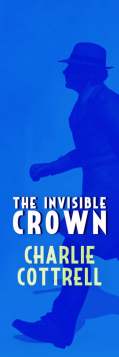
Today, I thought it’d be fun to take a look at the actual dead trees edition of The Invisible Crown (available now, hint hint).  Back before the book came out, I saw a digital mock-up of the cover.  It’s pretty awesome, but getting to hold the actual, physical thing in my hands is evEddie-bookmarks-crown-1.jpgen better.  And that’s down to the fine folks who designed it all.
Generally speaking, most people tend to skip over the Acknowledgements page in a book.  I know I usually do, because I don’t know them and I won’t get the little in-jokes and personal asides that pepper those pages.  But when you skip over the Acknowledgements, you miss out on finding out who all supported the author in creating the book.
So today, let’s take a look at a couple of those individuals.  First, there’s our cover artist, Freddy Torres Vega.  Freddy came up with several character pieces of Eddie Hazzard, Miss Typewell, and a couple of other characters.  It’s some cool work, even if I’m a little iffy on his portrayal of Hazzard with a mustache.  His use of color is fantastic, though, and he really came through with a cool design for the cover (way better than whatever crappy pencil sketch I initially sent them.  That’s why he’s the guy who designs covers, and I just write the words that go behind the cover).2017-02-22-09-31-53

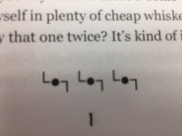
The other hidden superstar of the book is Cindy C. Bennett, the editor and book designer.  She did all the layout and formatting for the book, chose the fonts and all that jazz.  She’s also the reason the 2017-02-22-09-32-08.jpgbook isn’t composed entirely of commas.  She made some great choices, too: the font for each section heading page is awesome, and the little symbol she used in place of my * * * between subsections?  It’s freakin’ cool.  I mean, look at it!

So, yeah, without the hard work of several other people, this book wouldn’t look as good as it does.  So, thanks to them!


Protest Music

If you’ve had a conversation that lasts more than two minutes with me in the past month or so, you’ve probably heard me go off on some rant about the current political climate and America’s current administration.  Believe me, I’d love to talk about something else, but every time I turn around, something new and horrifying has happened and I get angry and riled up all over again.

Now, this may seem tangential, but my creative pursuits go in waves.  Sometimes, I’m all about novel writing, sometimes it’s comics and drawing, and sometimes it’s music.  Lately, it’s been music.  And here’s where it connects: the single upside to my current mood and reaction to American politics has been to write a slew of protest songs.

Now, there’s a long history of musicians picking up an instrument and address injustice and inequality.  Guys like Bob Dylan, Pete Seeger, and Woody Guthrie made their careers writing songs of protest (sure, Dylan moved away from that pretty quick, but that’s how he started out).  Speaking out for the less fortunate, the voiceless, the silent masses – that’s what protest music is all about.

And so, despite my distaste for the current administration and its policies, my songwriting has felt pretty inspired lately.  I would gladly trade inspiration for a different president, mind you.

Happy Valentine’s Day 2017

When I was a younger man, single and insecure and full of anxiety and dumb ideas, I was a bit of a sad sack.  Okay, a lot of a sad sack.  I moped around the campus fountain at midnight listening to sad songs on my Discman like some mooney-eyed twit.  And I made mix CDs of songs about love gone sour and losers.

Nowadays, I tend to mope less, mostly because I finally got medication and therapy.  Marrying an amazing woman helped, too.  While I don’t make mix CDs anymore (I make playlists on my phone instead, because it’s 2017), I do still enjoy putting together thematic lists for special occasions.  While I think of myself as less of a loser than I once did, I thought it might be fun to put together one more Loser List for Valentine’s Day.

Before the list, though, a few words on this holiday.  I’ve never been a big fan of Valentine’s Day.  Maybe it’s a result of being single throughout college and grad school.  Maybe I resent being told I have to be romantic on a set day in a specific way (today’s comic is a pretty clear indicator that the Wife and I have our own unique brand of affection and romance).  Honestly, I don’t think there’s any real reason to feel obligated to do some big, ridiculous thing today, unless you really want to.  Some folks really love Valentine’s Day, and that’s great for them!  For the rest of us, let’s just act like it’s a regular ol’ Tuesday, and everyone has joined Garibaldi’s Red Shirts for the day for some weird reason.

Anyway, without further ado, here’s the Losers List.

The Beatles, “I’m a Loser”: A Hard Day’s Night is one of my absolute favorite Beatles albums, and this manages to be one of the best songs on the record.

Beck, “Loser”: Like this song wasn’t going to show up on this list.

Tom Petty & the Heartbreakers, “Even the Losers”: More a song of hope than anything else, it always gives me strength to think that even the losers can get lucky sometime.

The Avett Brothers, “Shame”: Sometimes we feel so sure of ourselves, only to realize we’re being tremendous assholes.

Bob Dylan, “You’re Gonna Make Me Lonesome When You Go”: Blood on the Tracks is full of sad songs of love gone wrong, but this is one of my favorites.

Cake, “Friend is a Four-Letter Word”: If early-20s me had an anthem, this was probably it.  If anyone needed a punch in the face, it was early-20s me.

Camera Obscura, “Lloyd, I’m Ready to be Heartbroken”: “‘Cause I can’t see further than my own nose at the moment.”  Brilliant.

Sting, “Seven Days”: Sting’s face is pretty punchable, too, if only because he refers to his rival as “Neanderthal.”

Jesse Malin, “She Don’t Love Me Now”: I’m a sucker for great horn arrangements.

Led Zeppelin, “Hey Hey What Can I Do”: Your woman runs around on you while everyone’s at church?  Robert Plant feels your pain.

Hike-a-Thon

Over on my comic blog the past couple of weeks, I’ve been running a storyline about the Trail Police.  The Trail Police were an idea my brother and I came up with back in the summer of 2002 while we were working in Yellowstone National Park.  The idea was the Park Rangers couldn’t manage the trails and the park visitors alone, and needed a vigilante to run around zapping ne’er-do-wells with a cattle prod.  It became this whole convoluted thing, involving a rival trail police guy named the Trail Master, and then I moved on with my life.  I revisited the idea a couple of summers later, then again late last year by bringing the Trail Master into the “real world” to compete and then befriend the comic representation of my brother.

And then all the nonsense with the Parks Service Twitter accounts happened, and my brother texted me asking why I wasn’t doing a Trail Police comic about it.  And then I couldn’t not do a series.

For this week’s comics, I decided to do a series of images of the characters hiking in various national parks.  I picked five of my favorites, found photos, and added Clyde, his daughter, and the Trail Master into them.  And the idea behind that – hiking in the parks to highlight and bring attention to the astonishing beauty and importance of these public spaces – felt like something important, something I’d like to see actually happen in the real world.

Now, I know not everyone lives near a national park, or a national park that isn’t under six feet of snow in the middle of February.  So what I was thinking was this: why not do a big hike for the parks sort of thing in March?  Get people out there, expressing their appreciation for the parks, reminding people of how important America’s Best Idea really is.

The plan, then: on March 25, we hike.  Everyone.  Get out to the nearest national park and get on the trail.  Carry signs if you want.  Tell the world you think the National Park System is worth preserving, worth fighting for.  Join me on the trail that day, won’t you?

Confession Time

I was once a Republican.

Now, in my defense, it was 1998, I grew up in Oklahoma, and I was pretty naive and didn’t know much about anything outside of my small town life.

But yeah, for a single midterm election in 1998, I voted Republican.  It was during my first semester of college, and honestly voting in Oklahoma for anyone other than the Republicans on the federal level (or even the state level, most of the time) was an exercise in futility.

But I did it because I was, in that first semester in college, very much a Republican.

I remember the first time my college biology professor mentioned evolution in class.  I had a bit of a tantrum, demanding to know how evolution could work if God existed.  I don’t recall correctly, but the professor was far kinder to me than I deserved.  He didn’t taunt me or belittle my beliefs, though he may have heaved a laborious sigh (this probably wasn’t a common position to come across when you teach science in a small, church-affiliated private university in the Ozark Mountains in Arkansas).  He said there was nothing in evolution that contradicted the notion of God or God creating everything.  I wasn’t 100% convinced, but I subsided.

And by the time I came home for Winter Break a couple of months later, I’d be basically unrecognizable as that naive young man.  I’m not saying Republicans are naive, just that I sure was.

I spent the next several years trying to tell myself and those around me that I was a left-leaning moderate, when the reality was that I was tipping so far to the left that I just about fell off that end of the spectrum.

I’m not saying education automatically makes everyone more liberal.  I know plenty of well-educated people who nonetheless remain conservative.  But it’s hard to go through several years of education in the social sciences and not come out of it thinking maybe the government needs to have some compassion for those outside the majority because, let’s face it, the government has spent centuries mistreating those in the minority.


tl; dr: College turned me liberal, and I’m super okay with that.

What Makes A Good Review?

Many of you (hopefully) have had a chance to purchase and read The Invisible Crown by now. You’ve probably heard me (and other authors) say that reviews are really important: they help drive sales, encourage readers to take a chance on an unknown author, and feedback helps us grow as writers.  But maybe you’re not sure what to write, or think writing a review is a painstaking, time-consuming process.

Well, I’m here to tell you that’s not the case!  You can write a review in just a minute or two, really, even if you type like my father (who has never evolved past the hunt-and-peck-with-his-index-fingers method of typing).  Below are all the important elements you’ll need to write a great review for any book!

  1. Keep it simple.  No reason to explain the whole plot or provide bios for all the characters.  The readers will get that stuff when they read the book.  On the other hand, you should…
  2. Be specific.  What did you really like?  What did you really dislike?  What is the one thing about the book that really jumped out at you?
  3. Be constructive.  It’s okay if you didn’t think it was the best book you’ve ever picked up.  Sometimes readers and books just don’t gel.  I had one of my self-published books disparaged because the reviewer found the book to just be, “too weird.”  Which is fine, if that’s how you feel, but it doesn’t really help, y’know?
  4. Be positive.  This isn’t saying you can’t voice legitimate criticism or talk about what you didn’t like.  You can totally do that.  But there are positive, constructive ways to do that.  One reviewer for TIC said they had a difficult time connecting with Hazzard because he was just too mean and drunk most of the time.  But he also couched it in a larger discussion of the things that the reviewer enjoyed in the book, and how he thought the book fit into a larger genre of fiction.  Plus, this is the first book in a series: gotta leave myself room for character growth (and improved sobriety).
  5. Be honest.  If you liked it, say so.  If you didn’t, still say so, but don’t be a jerk about it.

Ultimately, a short, honest review that is specific and constructive is much better than a long, rambling review that tries to do too much.  Happy reading and reviewing!