Looking Back Through the Mists of Time

If you’ve read The Invisible Crown and stuck around to read the Acknowledgements page, you might’ve noticed I talked about the long gestational period the story went through.  While I can no longer find the notebook I wrote the original story in way back in the summer of 2002, I did find a file on Dropbox the other day labeled “Hazzard 1 Rewrite.”  It is exactly what it sounds like – a new draft of the original story, written after the version created for the Writing Group in 2004-2005.  I was working to refine the thing, but this particular draft was abandoned about two pages in for some reason.  I thought it might be fun to share this nigh-ancient version of part of the first chapter.  For me, it’s fun because I get to see how much of the characters and setting were solidly in place from the very beginning,  and how much Eddie Hazzard has changed over time (he used to be an even bigger asshole, if you can imagine that).  Also, apparently I thought “Stoover” was an acceptable character name.

Please don’t hold any terrible prose or awful character choices against me.  This is over a decade old; when this was written, I was still an unmarried twit back then.

* * *

It was too early in the morning for me to be at work.  That is to say, it was still morning.  I generally prefer waiting until well after noon to start my day, and today especially should have been one of those days.  I was nursing a hangover, the sort that would kill a lesser man.

They say the best way to deal with a hangover is to have a drink of whatever you got drunk on.  I got out of my chair and walked over to a file cabinet.  The top drawer was labeled “Hard Evidence,” and the bottom was labeled “Hard Stuff.”  I went for the latter, pulled out a bottle that should have had a skull and crossbones on the label, and took a pull straight from the bottle.  My head cleared, and I staggered back to my worn-out chair, ready for a nap.

The sign on my frosted-glass door reads: “Eddie Hazzard, Hard Boiled Detective.”  Currently I’m not only hard boiled, but slightly pickled.  Such culinary feats are not my concern, though.  My concerns are normally 5’7”, red-headed, and sultry.  And at 11:00 AM this particular morning, one hell of a concern slinked into my office and fought my faithful bottle for attention.  She won.  Dames usually do.  Granted, the dames are usually what drive me to the bottle in the first place.

She slammed the door behind her, which brought me back to the land of the conscious.  I dropped the bottle, which rolled across the floor and came to a rest against her black high heel.  “A little early to be hitting the sauce, isn’t it, Detective Hazzard?” she asked in a clipped, much too precise way.

“Hey, it’s lunchtime somewhere in the world, lady,” I replied blearily.

“Are you the so-called ‘hard-boiled detective’ of this…establishment?” she asked.  She looked around my bare, shabby office for a place to sit that wasn’t covered in stacks of overdue bills, old coffee cups, or unidentifiable stains of questionable origins.  She gave up and just stood.

“Lady, I’m hard boiled, soft boiled, scrambled—I do all sorts of detecting.”  She frowned a little at me—women do that way too much—and said she had a case for me, if I was interested.  My body said “no,” but my bill collectors said “yes,” so I asked her what the case was.

“My name is Vera Stoover.  My husband, Wally, has disappeared.”

“That’s a real shame, lady,” I said, digging a cigarette out of the pack and lighting it up.

“Yes, well, he was scheduled to testify against some…gentlemen of questionable virtue in court next week, but he disappeared on his way to a safehouse.”

“So you think these guys grabbed him, huh?”

“I’m certain he’s been abducted by those men, Detective Hazzard,” she said in a low voice.  Her bosom moved in a way that I was sure was illegal in most states.  “Will you please find him for me?  I’ll pay you handsomely.”  She pouted, her full bottom lip protruding obscenely.  I couldn’t tell if she was doing this on purpose or was really just that sort of classic noir bombshell.  I decided I didn’t care.

I told her I didn’t care if the money was pretty or ugly, just so long as it was real.  She handed me a photograph of a skinny, sallow-checked man in an expensive suit and a hat that went out of style back in the 1940s.  “This is Wally,” she said.  “As you can see, there’s not much too him.  I fear he may be injured…or worse.”   She reached into her bag and pulled out a slip of paper with two names: Guido and Billy Sunshine.  I’d heard of them before; they were definitely bad news.  Then she pulled out a roll of twenties and handed it to me.

“I’m very thankful for your help, Detective Hazzard,” she said.  “This is a small advance for your services.”

“Don’t worry, Mrs. Stoover, I’ll find your husband,” I said, mustering as much confidence as I could manage.  She smiled weakly and slunk back out of my office, and the view drug me out of my alcohol haze long enough to wonder if I’d maybe made a bad mistake.  I retrieved my bottle and took another pull.  Times like these made me wish I’d listened to my mother and played in traffic when I was a kid.

* * *

My first stop in my search was the corner of 4th and Shirley Temple Avenue, locally known as “No!  Not my knee!”  It was the favored hangout of unemployed bodyguards, thugs, and hired goons.  These were the kind of grunts who made a living teaching anyone who got too close or asked the wrong questions a “lesson.”  Ironic, really, considering most of them had the educational equivalent of flunking kindergarten.  Granted, a lesson taught by one of these simpletons wasn’t one you’d forget in a hurry.  It was a very blunt education.  Or occasionally sharp, if they put a nail in the stick or used a knife.

They spent most of their free time doing pretty much the same stuff they did when they were employed, only without the guidance, direction, or discipline of working for a mob boss.  Folks tended to stay as far away from this area as possible; yet here I was, walking right into it.  Sometimes, the hero has to do brave but stupid things.  Or he might just be completely stupid.  You never can tell.

I had a certain thug in mind, a gorilla of a man named Vinny.  Vinny didn’t have the intelligence of a gorilla, mind you—no, an ape has a few more braincells banging around in their skulls than Vinny does—but he was the approximate shape and size of one and had about as much hair on his body.  Vinny stood about 6’8” and weighed 350 pounds.  He sort of stooped over, and you almost expected to see his hairy knuckles drag the ground.  He had a slopping forehead, thick eyebrow (there was only one, of course), and tiny, beady eyes.  In a word, Neanderthal.  Not that he’d understand the word.  They called him Vinny the Pooh, because most of the people he paid a visit to were prone to crapping themselves whenever they saw him.

I found Vinny standing in the mouth of a small side alley, blocking daylight for the poor sap he had cornered.  “Th’ Boss wants yer to pay up by t’morrow, or else.”  Most people said “or else” with an implied ellipsis at the end of it, as though the worst part of the threat was that you didn’t know what would come next.  But with Vinny, it was obvious what was to come: a beating so severe your grandmother would feel it.  He didn’t have to threaten; he merely promised great pain if his demands weren’t met to the letter.  It was amazing how often the poorest of men somehow managed to scrape together a loan payment after a visit from Vinny.

Vinny shuffled aside with all the speed and grace of continental drift and the guy scurried out of the alleyway as fast as his rubbery legs would carry him.  Vinny’s piggy eyes followed his fleeing prey but got distracted when I stepped into view.

“Whudda you want?” he asked in his gravelly drawl.

“I need to see your boss, Vinny,” I said, trying my best to keep my knees from knocking.  The trick with guys like Vinny was to never show them fear and hint that you would bleed much too easily to make it worth their bother hitting you.  It’s a delicate balance to say the least.

Vinny took a minute to process my request, his brow furrowing like plowed field.  Then he finally said, “Tuba no wanna talk witchu.  He still ain’t happy ‘bout whatchu done to Four Eyes.”  He meant Four Eyes Malone, the Tuba’s accountant.  I’d sent Malone up the river for a sum in the federal pen a few months ago.  It was rumored that Malone’s incarceration ended up costing the Tuba millions of dollars in missed opportunities and poor interim bookkeeping.

“Look, Vinny, let’s let bygones be bygones,” I said, smiling.  When his brow furrowed in concentration and confusion again, I said, “Hey, let’s forget the past.  I’m sorry about Four Eyes, and I really need to talk to the Tuba.  Where is he?”

Vinny stood there for a moment, then finally rumbled, “He’s at the Speakeasy on 8th Street.”

“The Speakeasy?” I asked.

“Yuh, that,” Vinny the Pooh said, then shambled off to find something else to beat up.
Other People’s Hard Work

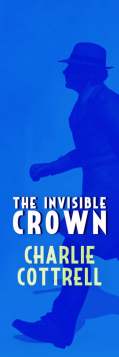
Today, I thought it’d be fun to take a look at the actual dead trees edition of The Invisible Crown (available now, hint hint).  Back before the book came out, I saw a digital mock-up of the cover.  It’s pretty awesome, but getting to hold the actual, physical thing in my hands is evEddie-bookmarks-crown-1.jpgen better.  And that’s down to the fine folks who designed it all.
Generally speaking, most people tend to skip over the Acknowledgements page in a book.  I know I usually do, because I don’t know them and I won’t get the little in-jokes and personal asides that pepper those pages.  But when you skip over the Acknowledgements, you miss out on finding out who all supported the author in creating the book.
So today, let’s take a look at a couple of those individuals.  First, there’s our cover artist, Freddy Torres Vega.  Freddy came up with several character pieces of Eddie Hazzard, Miss Typewell, and a couple of other characters.  It’s some cool work, even if I’m a little iffy on his portrayal of Hazzard with a mustache.  His use of color is fantastic, though, and he really came through with a cool design for the cover (way better than whatever crappy pencil sketch I initially sent them.  That’s why he’s the guy who designs covers, and I just write the words that go behind the cover).2017-02-22-09-31-53

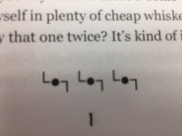
The other hidden superstar of the book is Cindy C. Bennett, the editor and book designer.  She did all the layout and formatting for the book, chose the fonts and all that jazz.  She’s also the reason the 2017-02-22-09-32-08.jpgbook isn’t composed entirely of commas.  She made some great choices, too: the font for each section heading page is awesome, and the little symbol she used in place of my * * * between subsections?  It’s freakin’ cool.  I mean, look at it!

So, yeah, without the hard work of several other people, this book wouldn’t look as good as it does.  So, thanks to them!


Protest Music

If you’ve had a conversation that lasts more than two minutes with me in the past month or so, you’ve probably heard me go off on some rant about the current political climate and America’s current administration.  Believe me, I’d love to talk about something else, but every time I turn around, something new and horrifying has happened and I get angry and riled up all over again.

Now, this may seem tangential, but my creative pursuits go in waves.  Sometimes, I’m all about novel writing, sometimes it’s comics and drawing, and sometimes it’s music.  Lately, it’s been music.  And here’s where it connects: the single upside to my current mood and reaction to American politics has been to write a slew of protest songs.

Now, there’s a long history of musicians picking up an instrument and address injustice and inequality.  Guys like Bob Dylan, Pete Seeger, and Woody Guthrie made their careers writing songs of protest (sure, Dylan moved away from that pretty quick, but that’s how he started out).  Speaking out for the less fortunate, the voiceless, the silent masses – that’s what protest music is all about.

And so, despite my distaste for the current administration and its policies, my songwriting has felt pretty inspired lately.  I would gladly trade inspiration for a different president, mind you.

Book FAQs

I’ve been getting some questions about The Invisible Crown, and I thought I’d address a bunch of them all at once just to save us all some time.

Q: When does the book come out?

A: December 19, 2016.  Less than a month from now!

Q: How much is the book?

A: The Kindle version is $4.99.  The print version will be more, I would imagine.  If previous titles released by my publisher are any indication, expect it to be around $15.

Q: Speaking of the print version, why can’t I pre-order that?

A: I asked my publisher.  It’s something to do with our vendors.  There won’t be a pre-order for the print version, but the print version will be available for purchase the same day the Kindle version is available to download.

Q: What about an audiobook?

A: Don’t know yet, but I’m working on trying to arrange that for those of you who want me in your ears.

Q: I read your old self-published stories, including the novella Missing Person that this book is based on.  Why should I buy this new book?

A: Aside from the shiny new cover and professional editing?  This is a completely revamped book, with 60% brand-new, never-before-read material!  Sure, the bones of the story are the same, and even some passages were lifted completely from the old story, but it’s a new book.  There’ll be a bunch of changes in book 2 as well, even though that was originally self-published, too.

Q: You just mentioned a second book.  Does that mean this is a series?  When will the rest of the series be available?

A: This is a series!  The second book will be out probably next December.  There will also be a short story set in the Hazzard Universe out sometime in the spring.  At present, there are seven books planned for the series.  The first four have been written, and the fifth book is in-progress.  Books six and seven have rough outlines.  Beyond that?  Well, there’s also almost a dozen short stories that will be released every so often (and eventually collected in print).  And maybe I’ll come up with some more novels, who knows?

Q: I don’t wanna wait!  Why do I have to wait so long for each new book?

A: Mostly because I’m not the only author at my publisher.  They want to give each book plenty of time to grow its audience and get attention before they jump right into the next one.  So, short answer is that I’m not their only author, so I can’t just crank out a book whenever I want.  But this is a good thing, too, because it means there’ll be books to look forward to for years to come.

Q: Will you be doing any signings?

A: I’m a little flabbergasted why anyone would want this but hey, it’s your book.  Trouble is, I don’t do this for a living (not yet, anyway!), so I can’t really just go out on a book signing tour or anything.  I’m trying to arrange something in my neck of the woods in Northern Virginia, probably just after the New Year, but aside from that?  It could be tricky.  I might do a signing in Oklahoma in the summer when I go out to visit my folks, but I’d need someone to set that up for me probably.

If you’ve got any other questions, feel free to leave them in the comments and I’ll try to answer them.  Remember, the book can be pre-ordered right now!

#NaNoWriMo2016

We’re a little over halfway through November, and I’ve been busy writing in my spare time.  This year, rather than creating a whole novel, I decided to work on a series of short stories in a variety of styles and genres.  Most of them will probably never see the light of day, but it’s fun to flex some different creative writing muscles and try out some styles and techniques I don’t use when writing Hazzard stories.

As of Tuesday morning, I have just over 10,000 words written across a half dozen different stories.  A few are complete, but a couple are still in progress.  I’m not really sure where most of them will go.  It’s kind of fun, creating new characters and situations completely independent of Hazzard and Arcadia.  I’m not sure how much I’ll end up with by the end of the month, but it’s a nice break and a fun way to stretch my skills.

Deliberate Writing

I write by the seat of my pants.  I make it up as I go along.  Everything is pretty fast and loose, and it usually (for the most part) works for the Eddie Hazzard stories.

Over last weekend, though, I started a new story, a different kind of story.  And I’m approaching it differently.  I’m writing and rewriting the same few paragraphs over and over, trying to get the wording and tone perfect.

It’s strange, writing very deliberately like this.  Not bad, per se, but very different from what I’m used to. The story evolved quite a bit from when I first started it; originally, it was a pretty bland fantasy story.  But I scrapped that in favor of a western style story, about an old Native American woman.  As of this writing, I’m not very deep into it.  I’m moving slowly, writing a few lines at a time, then thinking about what to say next.  I don’t have a tight plot for the story (I can only change my writing process so much), but I do have a good idea what will happen in the story.  I know how it ends.  I know some of the things that have to happen in between.  I don’t know how long it will end up being.  I do know I’m enjoying the process of writing this story.  It’s a nice palate cleanser in between Hazzard novels.  Hopefully you’ll get to see it sooner rather than later.

The Diversity Question

Okay, deep breath.  We’re wading into some tricky waters here, but they’re waters we’ve gotta cross.  We need to talk about diversity in fiction.

Let’s start with the statement that diversity is a good thing.  If you don’t accept that premise, you probably won’t get much out of the rest of this post.  The goal with diversity in fiction is to try to create a cast of characters that’s more representative of the world outside your door.

Now, that being said, there’s a challenge there: I’m a straight white male.  My family is so WASPy, we practically buzz when we talk.  I am a tiny bit Cherokee (and, in fact, I have my official Cherokee Nation ID card, reflecting that heritage), but you wouldn’t know it to look at me.

So, the question is, how does a straight white guy write characters who, well, aren’t that?  I’ll be the first to admit my experiences are vastly different than those of a person of color or someone who isn’t straight.  I worry about rendering their experiences authentically, about creating characters who feel true and not cliche.  I worry that I don’t have the right or ability to tell stories about people of color or LGBTQ individuals.  And I worry that if I do write stories about people who have such different experiences than I do, I’ll do it wrong and misrepresent people’s experiences.

At the same time, I feel like it’s important to tell stories about people who are different than me.  I don’t want my stories to feel monochromatic.  I want people to feel like they’re represented and reflected in the tales I tell, and I want my stories to feel representative of the diversity of society.  To achieve this, I’m asking for help: from people of color, from LGBTQ individuals.  Anyone who wants to help me keep the voices and experiences in my stories authentic, who wants to help me make sure I do right by folks, let me know.  I need beta readers for this stuff, folks.  My main cast is predominantly people of color, and I want to be able to have them feel like real people, not caricatures.

As an individual with a hell of a lot of privilege, I feel like I’ve got a responsibility to use that privilege to boost others.  There are already enough stories about straight white men out there; help me tell stories about the rest of our diverse population.


Book 2 Complete!

The edits for Book 2 (The Hidden Throne) are complete!  The manuscript was sent off to my publisher yesterday.

I’m glad to have this book finally done and sent off.  Granted, it doesn’t come out until December 2017, but that just means there’s lots of time for polishing and prepping.

What’s up next?  Well, lots of things.  I need to make edits to Book 3 and Book 4.  I need to continue (and complete) Book 5.  I’ve got lots of short stories I want to tweak and polish up and set up in the publishing queue (there’s already one lined up to be published in April 2017).

All in all, I’m very excited to have this project done, and it’s got me fired up to move on to others.

Progress Notes

Just thought I’d give you guys an update on Book #2.  I’m about halfway through the manuscript, plugging right along a few pages at a time.  There’s a couple of spots I want to go back and completely rewrite now, but I want to get through the basic edits first.

My current goal is to have Book #2 done and sent off by the end of September.  Yeah, it’s not my original goal (which was the end of July), but it still gives my editor plenty of time to go through it (the book won’t be released until next December, after all).

I’m still waiting to hear back from said editor on Book #1.  I’m starting to get anxious about it all, since the book release is only three months out (!).  I’m still not sure what the metrics are for me to consider the release a success; I guess if folks other than my parents read it, I’ll be happy.  I want to try to go to some conventions next year to try to sell it, but we’ll have to see if that’s feasible or not.

In other news, I’ve started another short story set in the Hazzard universe, only this one is told from the perspective of his always-capable assistant, Ellen Typewell.  I’m pretty excited about it, even if I don’t have the thing fully plotted just yet.  I guess we’ll see where it goes.

The Summer of ’02 and the Birth of Eddie Hazzard

I’m going to tell you a story.  A story about mountains, and hiking, and storytelling, and the search for some sort of direction.  It’s the story of how I spent a summer in Yellowstone National Park and wrote a short story about a down-on-his-luck private detective with a serious drinking problem.

The summer of 2002 followed my graduation from college.  My younger brother and I got jobs working for Xanterra, the concessions company that operates food service and gift shops in a bunch of the national parks.  We were working as table bussers in the dining hall at Mammoth Hot Springs, at the north end of the park.  It wasn’t a particularly difficult job; we had difficult shifts sometimes, and were often very busy, but it was simple and straightforward and didn’t require much in the way of thinking.  In our downtime, we hiked, played basketball and soccer, and worked on writing songs.  I also spent a significant amount of time reading; that was the summer I got into Terry Pratchett, reading almost a dozen of his Discworld novels over those few months.

When I was between books, I’d spend time writing.  I had a Mead 5-Star five-subject spiral notebook, in which I wrote poems, songs, and a short story idea I’d come up with.  The story, which I eventually called “Missing Person,” is barely recognizable as the same story that will be published in December as the full-fledged novel The Invisible Crown.  The basic bones were the same: woman comes into the detective’s office, hires him to track down her missing husband, he goes through a series of misadventures until he discovers the missing man’s fate, and…well, telling anything more would be giving away the story.  Eddie was still Eddie Hazzard, though he was less snarky and more a misogynist jackass.  The story itself was more of a pastiche of noir cliches and was set in some undefined time in the past.  The story wasn’t great, but there was something in it that I must have liked, because I kept coming back to it over the next decade.

I don’t know where that spiral notebook is now, which is kind of sad.  I’d like to go back and re-read the original story, the handwritten kernel of a larger, more elaborate work that will finally see the light of day before the end of the year.  Things have changed, but Eddie is still around, and he has lots of new adventures ahead of him in the coming years.