Deliberate Writing

I write by the seat of my pants.  I make it up as I go along.  Everything is pretty fast and loose, and it usually (for the most part) works for the Eddie Hazzard stories.

Over last weekend, though, I started a new story, a different kind of story.  And I’m approaching it differently.  I’m writing and rewriting the same few paragraphs over and over, trying to get the wording and tone perfect.

It’s strange, writing very deliberately like this.  Not bad, per se, but very different from what I’m used to. The story evolved quite a bit from when I first started it; originally, it was a pretty bland fantasy story.  But I scrapped that in favor of a western style story, about an old Native American woman.  As of this writing, I’m not very deep into it.  I’m moving slowly, writing a few lines at a time, then thinking about what to say next.  I don’t have a tight plot for the story (I can only change my writing process so much), but I do have a good idea what will happen in the story.  I know how it ends.  I know some of the things that have to happen in between.  I don’t know how long it will end up being.  I do know I’m enjoying the process of writing this story.  It’s a nice palate cleanser in between Hazzard novels.  Hopefully you’ll get to see it sooner rather than later.

The Diversity Question

Okay, deep breath.  We’re wading into some tricky waters here, but they’re waters we’ve gotta cross.  We need to talk about diversity in fiction.

Let’s start with the statement that diversity is a good thing.  If you don’t accept that premise, you probably won’t get much out of the rest of this post.  The goal with diversity in fiction is to try to create a cast of characters that’s more representative of the world outside your door.

Now, that being said, there’s a challenge there: I’m a straight white male.  My family is so WASPy, we practically buzz when we talk.  I am a tiny bit Cherokee (and, in fact, I have my official Cherokee Nation ID card, reflecting that heritage), but you wouldn’t know it to look at me.

So, the question is, how does a straight white guy write characters who, well, aren’t that?  I’ll be the first to admit my experiences are vastly different than those of a person of color or someone who isn’t straight.  I worry about rendering their experiences authentically, about creating characters who feel true and not cliche.  I worry that I don’t have the right or ability to tell stories about people of color or LGBTQ individuals.  And I worry that if I do write stories about people who have such different experiences than I do, I’ll do it wrong and misrepresent people’s experiences.

At the same time, I feel like it’s important to tell stories about people who are different than me.  I don’t want my stories to feel monochromatic.  I want people to feel like they’re represented and reflected in the tales I tell, and I want my stories to feel representative of the diversity of society.  To achieve this, I’m asking for help: from people of color, from LGBTQ individuals.  Anyone who wants to help me keep the voices and experiences in my stories authentic, who wants to help me make sure I do right by folks, let me know.  I need beta readers for this stuff, folks.  My main cast is predominantly people of color, and I want to be able to have them feel like real people, not caricatures.

As an individual with a hell of a lot of privilege, I feel like I’ve got a responsibility to use that privilege to boost others.  There are already enough stories about straight white men out there; help me tell stories about the rest of our diverse population.


“Watered-Down Love”: Dylan’s Born Again Albums, Reconsidered

Bob Dylan went Born-Again Christian in 1979, and decided that his music would follow suit.  For three albums, he pursued his new Lord and Savior through his songs.  Then, rather abruptly, Dylan went back to…well, to being Dylan with the 1983 album Infidels, and the whole business of those three albums was just kinda dropped.  The accepted wisdom – and my feelings on the matter when I first heard these three albums back in graduate school – is that Dylan’s Born Again phase yielded pretty bad music.  For albums built around the theme of a newfound faith, they feel oddly dispassionate, uninspired, and bland.  And Dylan’s lyrics?  Mundane, straightforward in a way Dylan never was, and boring.  These three albums – Slow Train Coming, Saved, and Shot of Love – rank as some of the worst in Dylan’s long and varied career.

But how much of that poor reputation is deserved?  Are the albums as bad as we’re told they are?  Again, I didn’t care for them when I first heard them almost a decade ago, but I did go in with the pre-formed opinion that they were going to suck.  Maybe I – we – have been too harsh.  I mean, on paper, these albums should be great: Dylan is writing about his faith, which should lead to inspired lyrics.  And heck, Slow Train Coming has guitar work by Mark Knopfler (of the Dire Straits).  This should be a knock-out home run combo, right?

Let’s take it album by album, see how they stand up thirty-six years later.

slowtraincomingSlow Train Coming (1979): The first of the trio, and widely considered the strongest.  The album opens well with “Gotta Serve Somebody,” a song that’s solid-enough to be a legitimate part of the Dylan canon even now.  That’s followed by “Precious Angel,” a song with pretty great instrumentation and some of the blandest lyrics imaginable.  Dylan sounds bored while singing, like he can’t be bothered to try.  There’s no conviction to it.  “I Believe in You” Has the same problem (in addition to some pretty strangled, strained vocal efforts by Bob) and an uninspired instrumental piece.  Things are not looking good for the album.  Things pick back up, though, with “Slow Train,” where Dylan’s lyrics are more circumspect and he sings them with more conviction.  Knopfler’s guitar work doesn’t hurt, either.  It kinda sags in the back half, though “Man Gave Names to All the Animals” is fun and relaxed.  The album ends with “When He Returns,” a slow piano-led paean to Jesus that just drags out for a every second of almost four-and-a-half-minute run time.  On the whole, not a classic album, but pretty solid.  Three of the nine songs are pretty great, which isn’t the best ratio but it’s better than nothing.
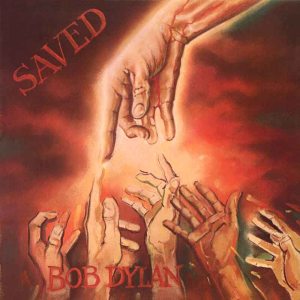
bob_dylan_-_savedSaved (1980): Saved opens with a mostly-acapella rendition of the old spiritual “Satisfied Mind,” which is pretty awesome.  It’s followed by the title track, which plays out like a tent revival gospel sing-along.  “Covenant Woman” isn’t bad; a middling Dylan song that veers a little deeper into schmaltz than you’d like, but is still likable enough.  “What Can I Do For You?” feels like Dylan doing a Dylan impression, right down to the harmonica solos.  “Solid Rock” picks up the pace a bit, which is appreciated, and almost feels like a Tom Petty song.  “Pressing On” is genuinely great, a solid mixture of Dylan’s lyrical concerns and instrumentation that feels inspired, passionate, and heartfelt in a way the previous couple of songs just don’t.  It’s followed by “In the Garden,” which feels like something you might’ve heard on the 700 Club back in the day (that’s not a good thing).  “Saving Grace” has a similar tone and church organ intro.  The album ends with “Are You Ready,” which aims for slow-burn Chicago blues but just feels forced.  Overall, Saved is definitely weaker than Slow Train Coming.  The good songs aren’t as good as the best of Slow Train Coming, and it just feels pedestrian in too many places.

shotofloveShot of Love (1981): The third and final album of the Born Again Trilogy starts out strong with the title track, though it does get a bit preachy here and there.  “Heart of Mine” is a good follow-up, maintaining a solid rhythm and pretty good lyric read from Dylan.  “Property of Jesus” falls flat, feeling too much like a cookie-cutter praise song from a middling praise and worship band.  “Lenny Bruce” is just straight-up boring, and “Watered-Down Love,” despite an awesome title and concept, feels watered down and flat itself.  “The Groom’s Still Waiting at the Altar” comes out of nowhere, though, feeling like a song from a different time and a different Dylan.  It’s a shock to the system, a swift kick in the ass that electrifies.  It’s followed by the reggae-inflected “Dead Man, Dead Man,” which finds Dylan hollering and shouting like the best tent revivalist.  The album stumbles a bit with “In the Summertime” and “Trouble,” but ends strong with “Every Grain of Sand,” a song that (while kind of boring musically) draws on Christian themes in the way Dylan should’ve been doing since Slow Train Coming, honestly.  It’s heartfelt and clever and inspired, and a great way to close out the trilogy.

But how does the whole business feel, all-told?  If we look at it from a purely numbers game, we’ve got 28 songs, about 11 of which are actually pretty good.  Less than 50% there.  But quality isn’t an all-or-nothing sort of thing, and that maybe doesn’t tell the whole story.  Songs like “Dead Man, Dead Man,” “The Groom’s Still Waiting at the Altar,” and “Pressing On” are affecting, heartfelt, and just about as good as anything else Dylan put out in the 1970s of 1980s.  Shot of Love definitely comes out as my favorite of the three, and an album that I genuinely enjoy and will even put on sometimes just to listen to.  Honestly, that’s all I ever want out of music: the desire to occasionally just listen to it just because.  Yeah, I end up hitting the skip button quite a bit, but the songs I like, I really like.  I think that’s really true of all three albums: while I don’t care for most of the songs, the ones that are good remind you that Dylan could take just about anything and make an interesting song out of it.

Conveniently, in this day and age of iTunes and Spotify, you can easily just grab the individual tracks you like and consign the rest to the dustbin of history if you’d like.  I’d definitely recommend it for songs like all three of the title tracks and songs like “Dead Man, Dead Man,” “Man Gave Names to All the Animals,” and “Pressing On.”  They’re nice reminders that even Dylan at one of the nadirs of his career could still write better songs than lots of other musicians out there at their peak.
eBag!

I got a new bag for lugging my stuff to and from work: an eBags Professional Slim Junior Laptop Bag.  I figured I’d give you guys my impressions on it, just for funsies.

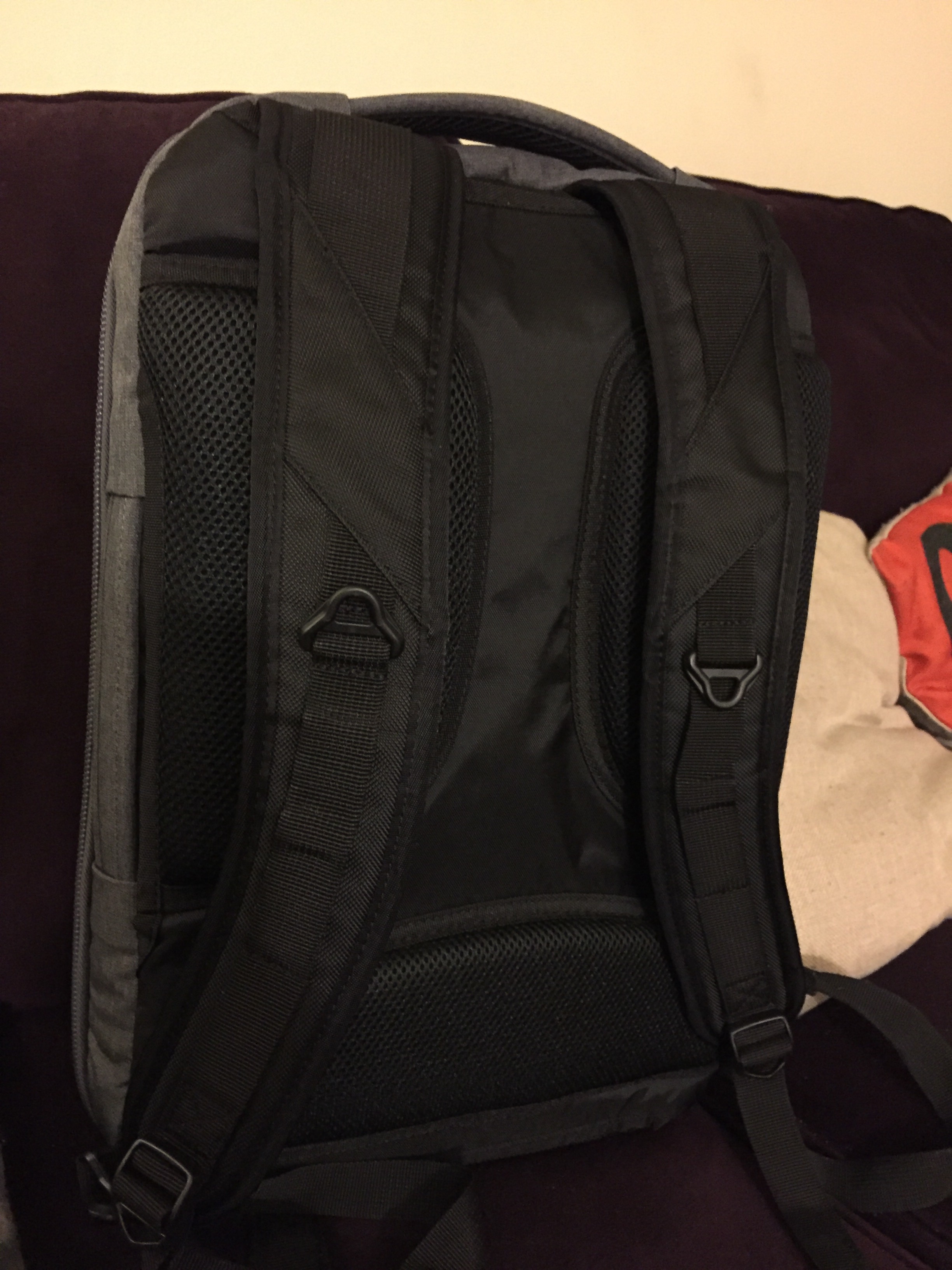
First, it’s a sturdy, well-made bag.  The zippers and stitching all appear to be high quality, and it’s well-padded in all the right spots.  It had one of those across-the-chest clips connecting the shoulder straps, which I hate, but that was easy to remove.  The straps themselves sit comfortably on the shoulder and slip or slide around.  The back of the backpack has a similar cushioning/ventilation setup as most Swiss Gear backpacks, which is nice.

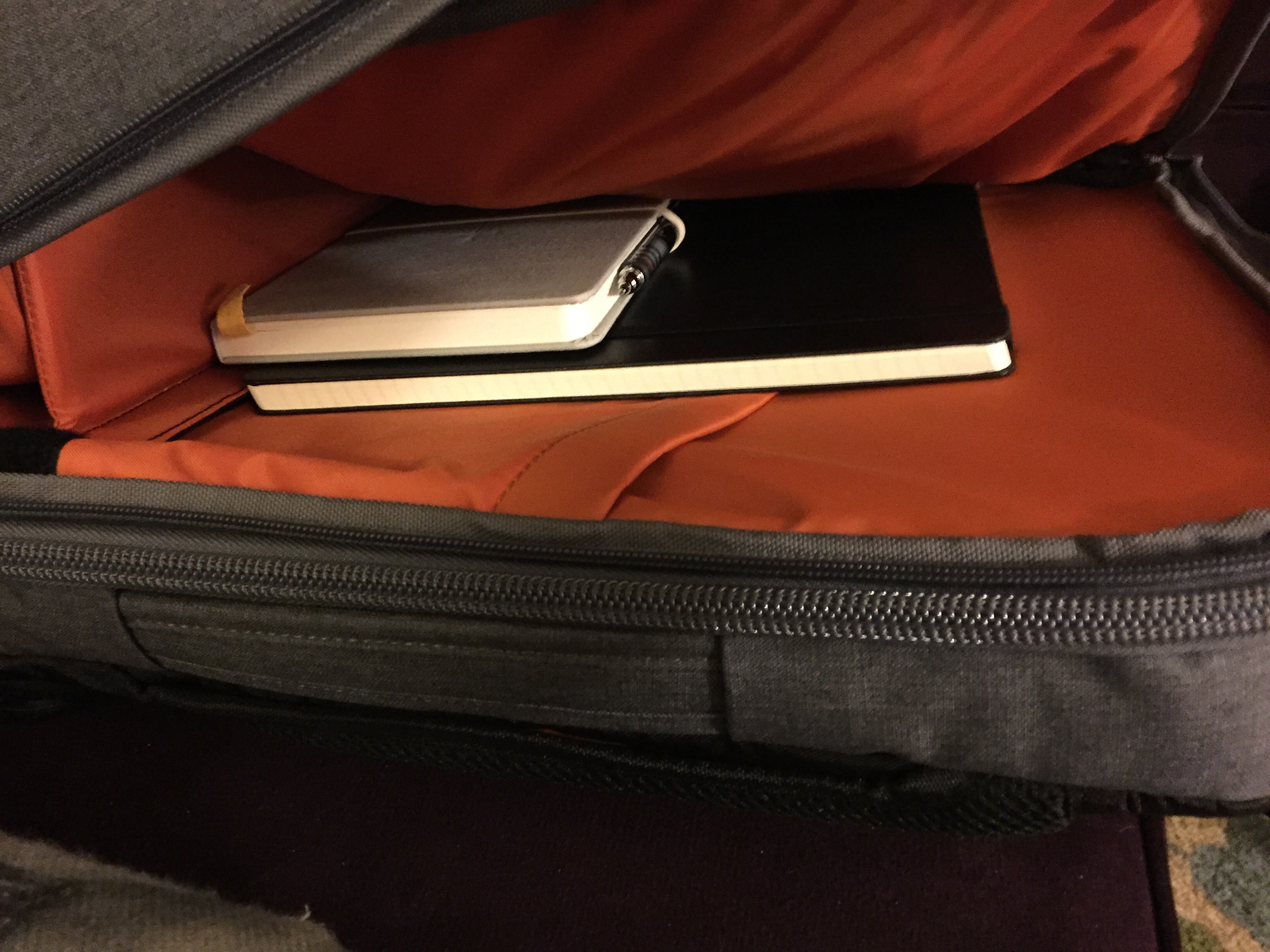
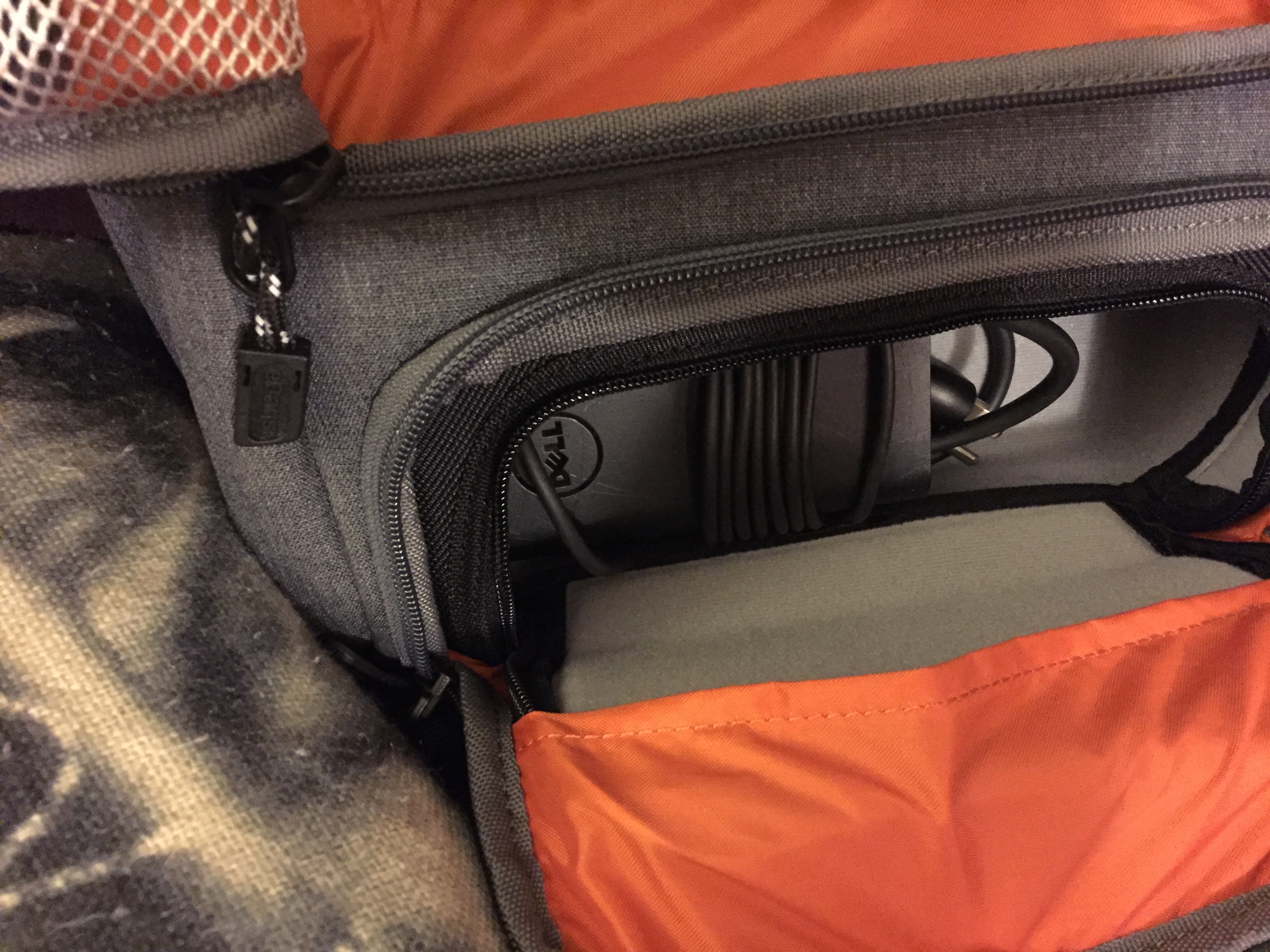
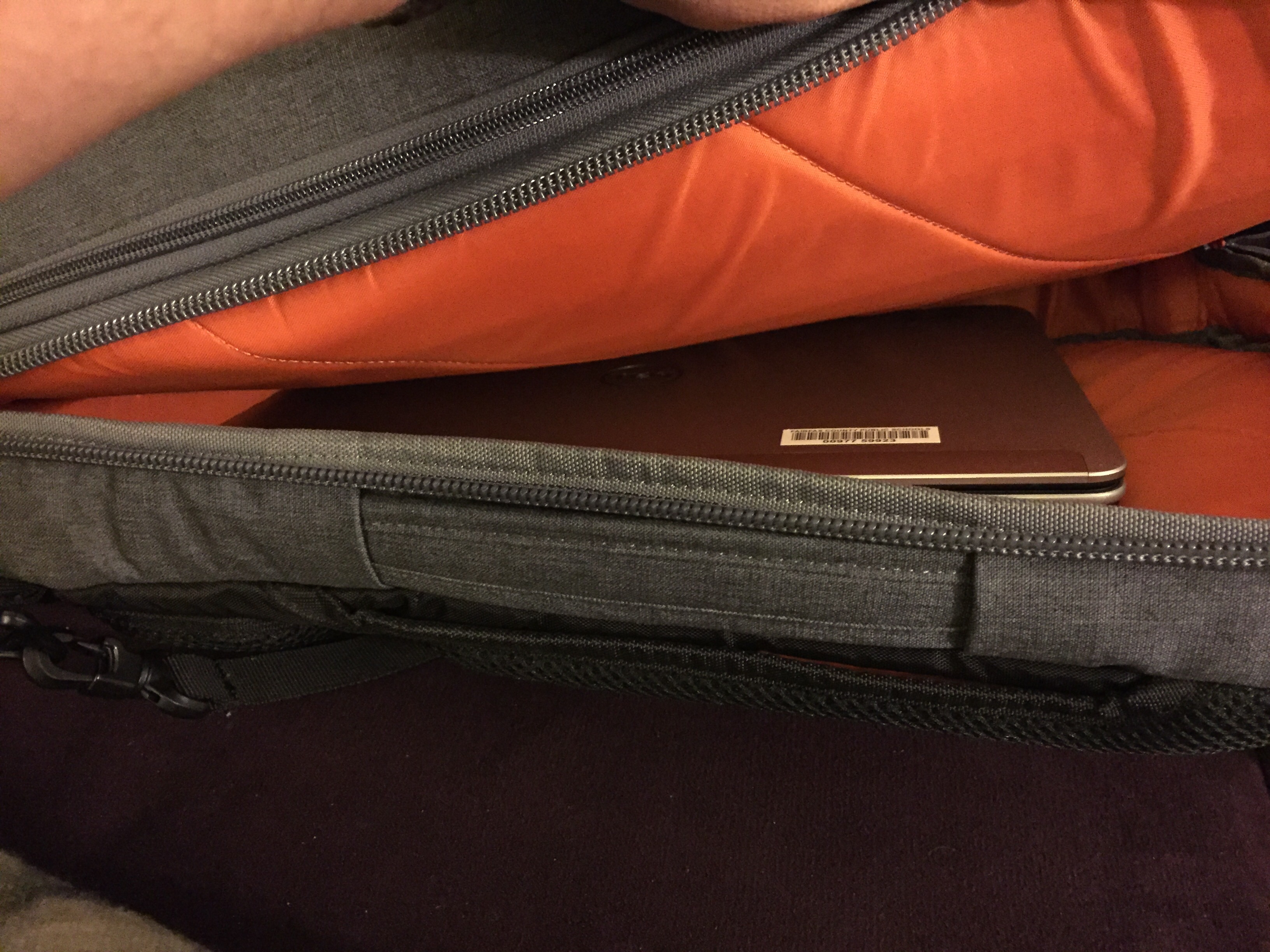
The bag is laid out very well.  There’s a separate, padded laptop compartment that easily holds a 15″ laptop (could probably do a 17″ laptop if you really wanted to), has a dedicated tablet pocket, and a main pocket that holds several sketchbooks/notebooks/etc.  There’s a bottle pocket on one side that can be zipped closed when not in use, and a hard-walled compartment at the bottom of the bag for your laptop’s power cable.

The bag rides well and is comfortable even over prolonged periods with a heavy laptop in it.   This particular backpack doesn’t hold as much as my old Swiss Gear backpack, but it’s more compact and convenient for school.

This bag would also be great for travel.  The shoulder straps can be disconnected and hidden away, and the bag has a slot so it can be attached to a wheeled suitcase.  There are also two handles, one at the top and one on the side, making it easy to carry even when you don’t have the shoulder straps hooked up.

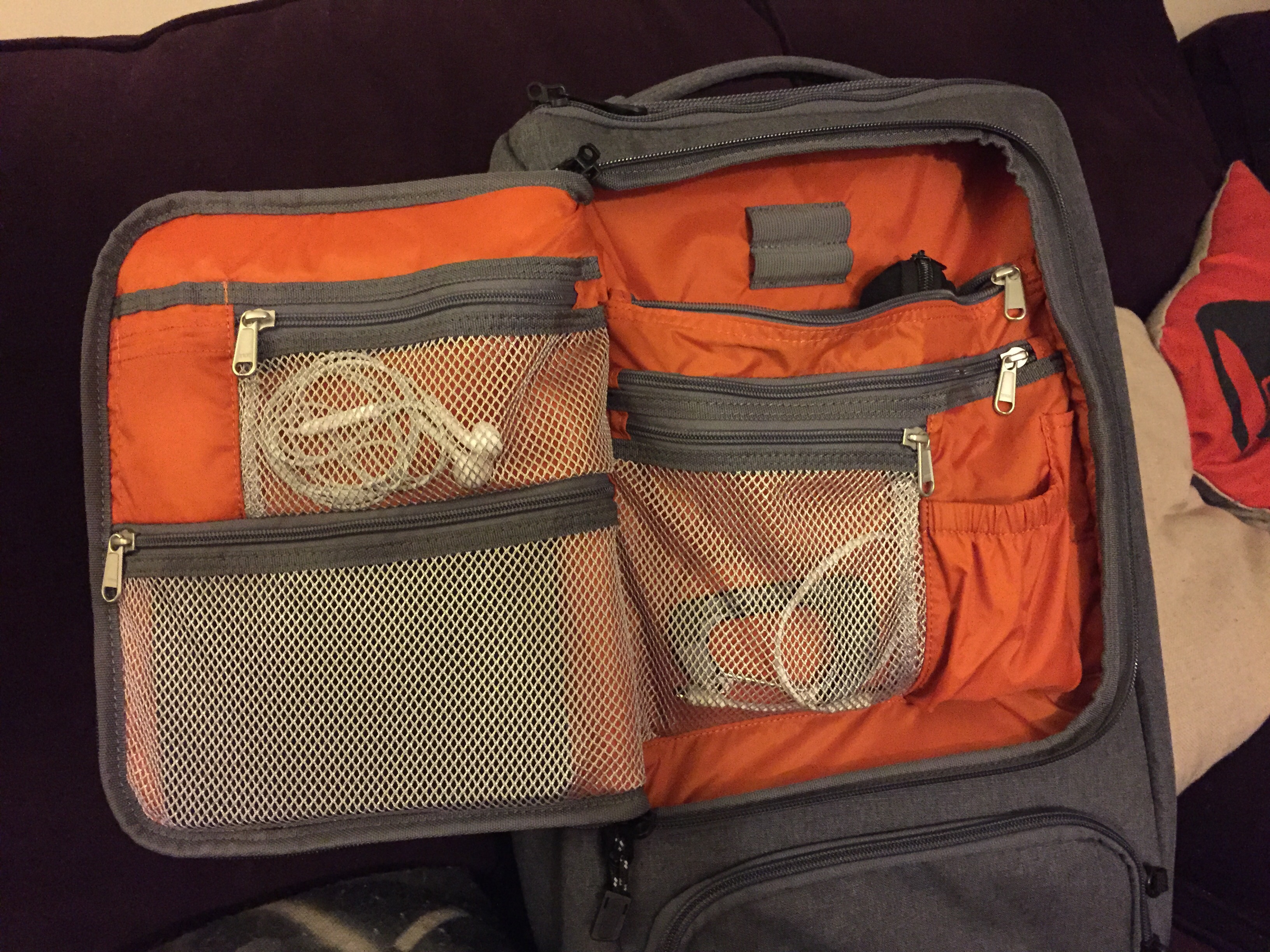
There’s another compartment on the bag with mesh organizer pockets, perfect for storing headphones, writing utensils, and other odds and ends.

The bag also looks great.  I got the heathered gray, which has an orange interior that contrasts nicely.  It looks very mature, and is perfectly acceptable and appropriate for professionals who don’t want to lug around a briefcase or briefcase-style laptop bag.

My biggest complaint is the balance of the bag.  Because it has the hollow, hard-shell compartment at the bottom for your power cable, the bag ends up being top heavy and falling over easily.  You can remove the hard compartment from the bag, making the main pocket deeper if you want, but then where do you put your power cable?  But it’s a small problem, considering I usually lay the bag down and slide it under my desk while I’m at work.

Overall, I’m really pleased with the bag.  It’ll hold up well over time and it looks great.  And it’s damn comfortable to use.  The different compartments are easy to access and cleverly-designed, and you can carry everything you need and nothing you don’t.  They usually retail for around $100, but the site often has sales and coupons (I got mine for considerably less than $100).  Plus, I got a coupon when I bought the bag good for $25 towards another purchase from the site.  That’s pretty sweet.

Budget Green/Red Commander Deck Tech

I am, as anyone who knows me is well aware, a gigantic geek.  Star Wars, Doctor Who, music, comic books, and so on.

One of my joys going back to high school is the card game Magic: The Gathering.  My friends group would sit around on the stage of the little theater and sling spells back and forth at each other.  I wasn’t the best player, nor was I the worst.

I kinda fell out of playing during college and graduate school.  Lack of players and funds made it tricky to keep up.  Fast forward about a decade, and some of my students wanted to learn to play, and I jumped at the opportunity to get back in.

I also learned about a new (to me) format: Commander, or EDH (which stands for the tremendously nerdy Elder Dragon Highland).  Apparently it’s a format almost as old as the game itself, using a legendary creature (traditionally one of the three-color legendary named dragons, but there are literally dozens of commanders in a variety of color combinations available now) to command a deck of 100 cards with no duplicates (except for basic lands).  There are some other ways in which Commander differs from a traditional game of Magic, but we’re not really going to concentrate on that.

The biggest challenge of Commander is the price tag.  Good Commanders can be pricey, and the best cards that create the best synergies with your Commander can break the bank.  I was looking at a pretty impressive Black/White Commander decklist the other day that came up around $1,700.  No, I didn’t forget a decimal in there or anything.  That’s seventeen hundred dollars.  And that’s madness to me.  Cost is always a barrier to getting into a game like Magic, but it is possible to set up a playable Commander deck for under $30.

For this deck, I tried to stick to cards that were commons.  There are a few uncommons as well, and the single rare is your Commander.  I also tried to stick to cards that were cheap as all get-out.  I used Card Kingdom for my prices; it’s the website where I tend to buy all my singles anyway.  On average, their commons cost $0.25.  The vast majority of the cards on this list cost that.  The most expensive card, amazingly, is not the Commander.  It’s Groundswell, a common that costs a whopping $0.79.

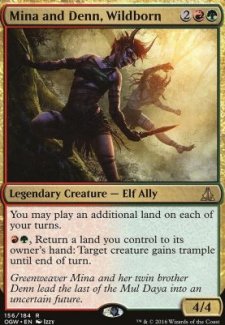
mina-and-denn-wildborn-47213-medium.jpgSo, the deck.  For the Commander, I went with Mina and Denn, Wildborn, a Red/Green 4/4 Legendary Elf Ally creature for two mana of any kind, one red, and one green.  When it’s in play, you get to play an additional land each turn.  You can also pay a red and a green and return a creature card to your hand to give another creature trample until end of turn.

There’s a couple of different synergies to play with here: first, Mina and Denn, Wildborn is an Ally creature, which gives you all sorts of Enters the Battlefield effects whenever another Ally drops.  I’ve included a dozen or so other Allies that boost and buff each other in various ways.

The other thing we can do with this Commander is give creatures trample, so I’ve included a host of big creatures and cheap pump spells to take advantage of that.  I also made sure to include some creatures that have Reach or Flying so you don’t get taken down by cheap fliers.

I also tossed in a handful of burn spells, Red’s specialty.  There’s something to be said for tossing two or three damage at a creature and removing them from the equation before having to decide how you’re going to block, or taking out a potential blocker and letting one of your creatures get through.

Finally, there’s mana ramp: spells and creatures that help you get your land out there faster so you can play your Commander and your big creatures.

Anyway, without further ado, here’s the deck list.  Again, I found everything through Card Kingdom, and – even assuming you need to buy the basic lands as well – the total cost for the deck was $27.46, a bargain.

Commander
Mina and Denn, Wildborn

Creatures (31)
Akoum Battlesinger
Beastcaller Savant
Firemantle Mage
Graypelt Hunter
Highland Berserker
Joraga Bard
Oran-Rief Survivalist
Akroan Crusader
Arbor Elf
Basking Rootwalla
Belows Lizard
Anurid Scavenger
Baloth Woodcrasher
Fangren Pathcutter
Garruk’s Packleader
Kiln Fiend
Krosan War Chief
Makindi Sliderunner
Nessian Game Warden
Terra Ravager
Archers of Qarsi
Battle Squadron
Chandra’s Spitfire
Crocanura
Deadly Recluse
Death-Hood Cobra
Destructor Dragon
Ember Weaver
Geist Trappers
Yavimaya Elder
Sakura-Tribe Elder

Sorceries (9)
Rampant Growth
Hull Breach
Explosive Vegetation
Flame Slash
Firebolt
Blessings of Nature
Arc Lightning
Jagged Lightning
Skyreaping

Instants (16)
Aspect of Hydra
Feed the Clan
Electrickery
Temur Battle Rage
Titan’s Strength
Fiery Impulse
Expedite
Titanic Growth
Giant Growth
Groundswell
Naturalize
Plummet
Barbed Lightning
Lightning Blast
Lightning Strike
Shattering Pulse

Enchantments (4)
Khalni Heart Expedition
Forced Adaptation
Snake Umbra
Fire Whip

Artifacts (6)
Swiftfoot Boots
Gruul Cluestone
Gruul Keyrune
Gruul Signet
Ring of Kalonia
Darksteel Ingot

Lands (33)
Dormant Volcano
Dwarven Ruins
Fertile Thicket
Forgotten Cave
Gruul Guildgate
Gruul Turf
Havenwood Battleground
Temple of the False God
Opal Palace
Mountain x12
Forest x12

Book 2 Complete!

The edits for Book 2 (The Hidden Throne) are complete!  The manuscript was sent off to my publisher yesterday.

I’m glad to have this book finally done and sent off.  Granted, it doesn’t come out until December 2017, but that just means there’s lots of time for polishing and prepping.

What’s up next?  Well, lots of things.  I need to make edits to Book 3 and Book 4.  I need to continue (and complete) Book 5.  I’ve got lots of short stories I want to tweak and polish up and set up in the publishing queue (there’s already one lined up to be published in April 2017).

All in all, I’m very excited to have this project done, and it’s got me fired up to move on to others.

The Beatles – Live at the Hollywood Bowl

As with most right-thinking individuals, I love the Beatles.  I’ve been listening to them since I was a small child, sitting in the living room with my father, reverentially placing the vinyl records on the turntable and dropping the needle.  I remember that the copy my dad owned of the Hey Jude collection had a skip in “Old Brown Shoe” after second verse, where the record would get stuck in an infinite loop and you had to gently nudge the needle to continue the song.

I never really thought much about their live work.  I mean, they stopped touring in, like, ’65, focusing all their time and energy on creating some of the most revolutionary studio albums of the decade.  And yeah, audiences cheered like mad when the Lads from Liverpool took the stage, but that in and of itself was a problem: there’s the old story that they couldn’t even hear themselves playing on stage at the height of Beatlemania, and there was even a legend that they sometimes didn’t actually bother even playing, since no one could hear.  You could shake your head for the “ooooh” at the right time and drive everyone nuts.

And then this album appeared.  I have a vague awareness that it’s related to a Ron Howard film, Eight Days a Week, about the Beatles during their touring years, and I was at first a bit hesitant to grab it.  I’m a little leery of releases like this; they whiff of cash grab.  But I picked it up anyway, and I’m pretty damn glad I did.

See, the thing I forgot – the thing I’m sure a lot of people forget in the wake of the years the Beatles spent not touring and performing shows – is that these guys could tear it up.  They cut their teeth playing dive bars in Hamburg; if you think they couldn’t still cut loose and barnstorm through a set just because they got matching suits and new haircuts, you don’t know these four musicians.

What strikes me the most about this particular set – aside from the fact that the Beatles still sound like they’re just having a helluva lot of fun playing music – is how breathless it all feels.  The album is 17 tracks long, and very few of them (only four) break the three-minute mark.  The rest are all considerably shorter.  They play these familiar songs, songs we’ve heard hundreds or even thousands of times, at a breakneck pace, as if they’re trying to reach the end of the song ahead of everyone else.  And there’s not much banter or piddling around between songs: someone (usually John or Paul) introduces the next song, usually saying what album it came off of, and then it’s off to the races.  They rip through “Things We Said Today” in 2:18, the Ringo-led “Boys” in a mere 2:08.  On several occasions, John and Paul actually sound literally out of breath at the end of the song, or maybe it’s a sprint.

The song selection is about what you’d expect from 1964-era Beatles: a mix of covers (such as “Dizzy Miss Lizzie,” “Long Tall Sally,” or “Roll Over Beethoven”) and well-known singles (“A Hard Day’s Night,” “Help,” “Twist and Shout,” and “Ticket to Ride”) and a few less-obvious choices (the aforementioned “Things We Said Today” or the actually slowed-down “Baby’s In Black”).  The band themselves are in fine form: everyone’s voices sound good, though John sounds like he’s holding in a laugh for most of “Help.”  Paul’s bass is a deep, melodic rumble, Ringo is clearly pounding the hell out of those drums, and the guitar interplay between John and George feels both well-practiced and loose.  This is music that’s vital and fun, and you just can’t help but sing along.  By the end of the 17-track collection’s 40-odd minutes, you’re as breathless and exhilarated as the band.

Is Live at the Hollywood Bowl a necessary Beatles album?  No, not really.  The studio versions of all these songs are almost uniformly superior in terms of quality of recording and performance.  It’s not a bad introduction, though it’s not going to do much to explain to a neophyte or an unbeliever why the Beatles were such a thing or why Beatlemania was happening.  It is a good time, though, a fun record that creates a snapshot of the Beatles as they strained against the earlier constraints of their sound and the limitations of trying to reproduce it on the stage in a live setting.  If you have any love or appreciation for the Beatles, you’ll definitely find something here worthwhile.

Progress Notes

Just thought I’d give you guys an update on Book #2.  I’m about halfway through the manuscript, plugging right along a few pages at a time.  There’s a couple of spots I want to go back and completely rewrite now, but I want to get through the basic edits first.

My current goal is to have Book #2 done and sent off by the end of September.  Yeah, it’s not my original goal (which was the end of July), but it still gives my editor plenty of time to go through it (the book won’t be released until next December, after all).

I’m still waiting to hear back from said editor on Book #1.  I’m starting to get anxious about it all, since the book release is only three months out (!).  I’m still not sure what the metrics are for me to consider the release a success; I guess if folks other than my parents read it, I’ll be happy.  I want to try to go to some conventions next year to try to sell it, but we’ll have to see if that’s feasible or not.

In other news, I’ve started another short story set in the Hazzard universe, only this one is told from the perspective of his always-capable assistant, Ellen Typewell.  I’m pretty excited about it, even if I don’t have the thing fully plotted just yet.  I guess we’ll see where it goes.

Favoites: Hamilton, An American Musical

I did a lot of theater in high school: Midsummer Night’s Dream, The Mousetrap, Wizard of Oz…it was a lot of fun, and helped me break out of my introverted shell.  I was a quiet kid, surprise surprise.

I never did well in any of the singing stuff (I had one of the few non-singing parts in Oz, as the ol’ wizard himself), but I always kind of enjoyed musicals.  Sure, they’re kinda ridiculous, but in my own experience it’s not uncommon for folks to break out into random song and dance.

All that said, I really haven’t ever paid much attention to musical theater.  It’s not that I have anything against most musicals, just that they never really seemed my style.  Rent was okay, Sweeny Todd was pretty excellent, but none of them ever grabbed me the way that so many of my theater friends were grabbed by musicals.

Then I heard Hamilton.

I’d heard a bunch of buzz about it late last year, seen people talking it up and heard everyone who had heard/seen it raving.  So I gave it a listen over Winter Break 2015.

First listen through didn’t really grab me, but I wasn’t paying very close attention.  Then I listened again.  And again.  And again.

And again and again and again.  Over and over.  I was hooked, and bad.  The last half-dozen songs put me in tears every time.  I drew several comics about the show.  Obsessed over it.  Started following Lin-Maneul Miranda (the writer and star of the show) on Twitter.

And then, in Februrary, I got to see it.

A dear friend – my musical partner, Emily – won free tickets (!) to see the show, with all of the original cast.  Sure, it was standing-room-only spots, deep under the balcony and behind a couple of posts, but we were there.  And we sang along, and I cried during the last several songs like I always do, and it was a perfect moment.

And, for every couple of weeks since then, I listen to the soundtrack a couple of times in a row.  I can get through most of the songs without crying now (still not the last couple, ’cause they’re so good and emotional), but it still fills a part of me that I hadn’t even known was empty.  While I’m not really a big fan of hip-hop, generally speaking, these songs speak to me in a way nothing else had before.

The show reminds me of what’s important: family.  Legacy.  Keeping to my principles.  Not throwing away my shot.  Writing like I’m running out of time.  I don’t know if history quite has its eyes on me (not the way I have my eyes on history in my day job, anyway), but that’s okay.

The Summer of ’02 and the Birth of Eddie Hazzard

I’m going to tell you a story.  A story about mountains, and hiking, and storytelling, and the search for some sort of direction.  It’s the story of how I spent a summer in Yellowstone National Park and wrote a short story about a down-on-his-luck private detective with a serious drinking problem.

The summer of 2002 followed my graduation from college.  My younger brother and I got jobs working for Xanterra, the concessions company that operates food service and gift shops in a bunch of the national parks.  We were working as table bussers in the dining hall at Mammoth Hot Springs, at the north end of the park.  It wasn’t a particularly difficult job; we had difficult shifts sometimes, and were often very busy, but it was simple and straightforward and didn’t require much in the way of thinking.  In our downtime, we hiked, played basketball and soccer, and worked on writing songs.  I also spent a significant amount of time reading; that was the summer I got into Terry Pratchett, reading almost a dozen of his Discworld novels over those few months.

When I was between books, I’d spend time writing.  I had a Mead 5-Star five-subject spiral notebook, in which I wrote poems, songs, and a short story idea I’d come up with.  The story, which I eventually called “Missing Person,” is barely recognizable as the same story that will be published in December as the full-fledged novel The Invisible Crown.  The basic bones were the same: woman comes into the detective’s office, hires him to track down her missing husband, he goes through a series of misadventures until he discovers the missing man’s fate, and…well, telling anything more would be giving away the story.  Eddie was still Eddie Hazzard, though he was less snarky and more a misogynist jackass.  The story itself was more of a pastiche of noir cliches and was set in some undefined time in the past.  The story wasn’t great, but there was something in it that I must have liked, because I kept coming back to it over the next decade.

I don’t know where that spiral notebook is now, which is kind of sad.  I’d like to go back and re-read the original story, the handwritten kernel of a larger, more elaborate work that will finally see the light of day before the end of the year.  Things have changed, but Eddie is still around, and he has lots of new adventures ahead of him in the coming years.