
No, I’m not abandoning the weekly playlists. I just wanted to try something different! So instead, I’ll be occasionally spotlighting albums that were important to my growth and development as a music appreciator. We’re starting off with 1981’s Face Value, from Genesis drummer and balding guy hero Phil Collins.
Man, this is a weird album. Like, truly strange. The huge drums in that first song, “In the Air Tonight,” obviously need no introduction, as that drum fill is one of the most iconic in music history. But as hypnotic and disturbing as that opening track is, the album gets even stranger from there on out. Collins indulges in blue-eyed soul, ’80s R&B, and . . . I’m honestly not even sure how to describe most of the songs on this album. They don’t seem to belong to any one specific genre, and they borrow from so many musical traditions that it’s hard to pin down exactly what he was trying to accomplish here. It’s like he threw a bunch of stuff at the wall, saw a good chunk of it was sticking, and just said, “let’s go with all of it,” and threw a bunch more random stuff at the wall.
So, after “In the Air Tonight,” the album plays around with that blue-eyed soul that I mentioned earlier for a couple of songs. This is pretty familiar territory for a Phil Collins solo album (or, at least, it will become familiar territory for such an album. This is his first solo outing, after all). “This Must Be Love” wouldn’t sound out of place on an Aaron Neville album from the same time period, honestly, and neither would “Behind the Lines.” They’re solid love songs, slickly produced. He’ll return to this style – with more punch and horns – on “I Missed Again,” another obvious highlight.
But tracks four and five are where Collins seems to go off the pop rails. I described “The Roof is Leaking” on last week’s playlist, where I essentially called it one of the more harrowing songs about homesteading I’d ever heard. And he does all of it with just a piano, a banjo, and a slide guitar. It’s awesome and dark and I kind of love it. This dovetails into “Drone,” which features African-tinged drums and wordless vocals. It sounds like something Pink Floyd would’ve done if they’d tried to make Ummagumma in the ’80s.
“You Know What I Mean” is the sort of ballad that Phil Collins created a whole new career out of singing in the ’80s. It’s all pianos and strings and manages to sound sincere and bittersweet without falling too deep into schmaltz, which is a nifty and difficult trick to pull off. “Thunder and Lightning” is the ’70s Earth, Wind, and Fire hit you never knew Collins had in him. “I’m Not Moving” is funky. That’s the best word to describe it, and it causes me a bit of pain to think of this guy who could have won “most likely to be a Russian taxi driver” in the late ’70s.
The album closes with a Beatles cover, a ballsy move from anyone. He goes with “Tomorrow Never Knows” and shows folks that Ringo ain’t the only one who knows his way around a drum kit. It’s weird and pulsing and almost psychedelic, if just a little too polished to quite fit that style.
It’s a weird pop album, which is pretty fitting for 1981, which I feel was something of a transitional time in pop music. If someone as self-effacing and goofy as Phil Collins could become an adult contemporary superstar back then, anyone could make it. Of course, that also assumes they could write songs as good as the ones that were on Face Value, and that’s a higher bar to clear.
 Their self-titled debut almost doesn’t sound like the same band. Most of the elements of a Huey Lewis and the News album are already present from the very beginning–Lewis’s voice, spiky guitar, the occasional harmonica solo, and even a bit of that organ sound–but it feels considerably less polished than later albums. That’s no surprise, really, as debut albums often still find the band searching for its footing. None of the songs are particularly memorable, none of the hooks are as catchy or insistent as what you’d find on their later albums.
 Fore is stronger than I remember. I like a lot of the songs on this one, and remembered them from my childhood as I listened through them. It suffers from a weak second half like Sports does, but the songs aren’t bad so much as just a bit forgettable.
 2. The Flaming Lips, Yoshimi Battles the Pink Robots
 4. Bob Dylan, Time Out of Mind
 6. Pink Floyd, Meddle
 8. The National, Boxer

 When my wife and I first got together, we went to a Tom Petty concert at Jiffy Lube Live (nee Nissan Pavilion). It was a great show, as every Tom Petty show I’ve ever been to was: he played the hits, running through them with the Heartbreakers like they were brand new songs. Everything felt fresh. It always did. I sang along as loudly as I could, which I also always did at Tom Petty concerts.
 The first time I saw Tom Petty & the Heartbreakers play live was in Oklahoma City in 1991. I was all of 11 years old, but my dad had managed to snag front row center tickets for us (I think Uncle Randy had actually got the tickets for us, since dad was usually on the road working and couldn’t be at the phone the second the tickets went on sale). Regardless, it was the greatest concert experience of my life. Petty and the band danced around the stage — which featured a massive inflatable tree with a doorway in the trunk — and Petty had some antics with a storage trunk and that hat he wore a lot in the ’80s and early ’90s, then he got chased around by guys in Nixon and Reagan masks in a bit of political theater 11-year-old me was definitely not tuned in to. It was a hell of a show, and I sang along to every song. At the end of the show, Tom Petty leaned down from the stage and handed me his guitar pick. I was stunned. I was ecstatic. I was grinning so wide my head just about split in half. I’ve still got that pick, tucked away in a baggie with a second edition Boy Scout Handbook at one of my parents’ houses.
 Tom Petty’s death has hit me hard, harder than Bowie or Prince did. It hits as hard as George Harrison’s death back in 2001. I listen to his work on a pretty constant basis. No matter what other music comes into my life, I know that Tom Petty & the Heartbreakers are always there with their chiming guitars and nasally vocals. Petty always seemed like he was having such fun making music, even when it was about serious stuff. The Heartbreakers were the band I wanted to be in — sure, there were better, more popular bands out there. There were even a few with better songs, though not many. And no one seemed like they enjoyed their work more than these guys. Petty had this laid back, chill vibe, and an aw-shucks sort of approach to his own super-stardom that was very endearing. The shots of him in the behind-the-scenes video about the Traveling Wilburys — the supergroup he was in with George Harrison, Bob Dylan, Jeff Lynne, and Roy Orbison — made it clear he felt like he’d hit some sort of undeserved jackpot. There’s always a “what the hell am I doing here?” grin on his face. He was the fan who became an equal.
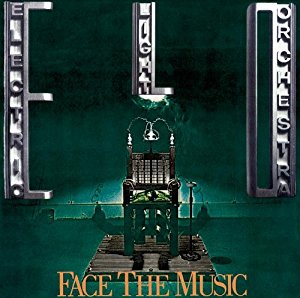 It’s a tremendously clever idea, and Jeff Lynne is a damn solid songwriter. By turns serious and silly, bombastic and subtle, he wove together disparate elements into cohesive songs. Outside of diehard fans, though, I don’t think many people know who he is (he was the guy in the Traveling Wilburys who wasn’t George Harrison, Tom Petty, Bob Dylan, or Roy Orbison). Yet he deserves accolades and admiration. The man is meticulous and precise, a perfectionist who tweaks and fiddles until everything is just so.
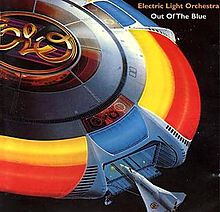 If those three albums whet your appetite and leave you wanting more, the next trio of albums to dig into are Eldorado, Discovery, and Time. Eldorado and Time play as loose concept albums, with Time feeling very much of its, um, time, with the early-’80s production and emphasis on keyboards and weird vocal and guitar effects, but it has some great songs including “Twilight,” “The Way Life’s Meant to Be,” “Rain is Falling,” and “Hold on Tight.” Eldorado is lighter on great songs, but the whole thing holds together and flows very well, taking the concept of the Rock Opera and going whole hog with an overture, reprise, and everything. Discovery is the least of these three, honestly, though it does feature the smash hit “Don’t Bring Me Down.” It’s honestly not that great, lacking the strong songwriting and clever hooks of peak-ELO.
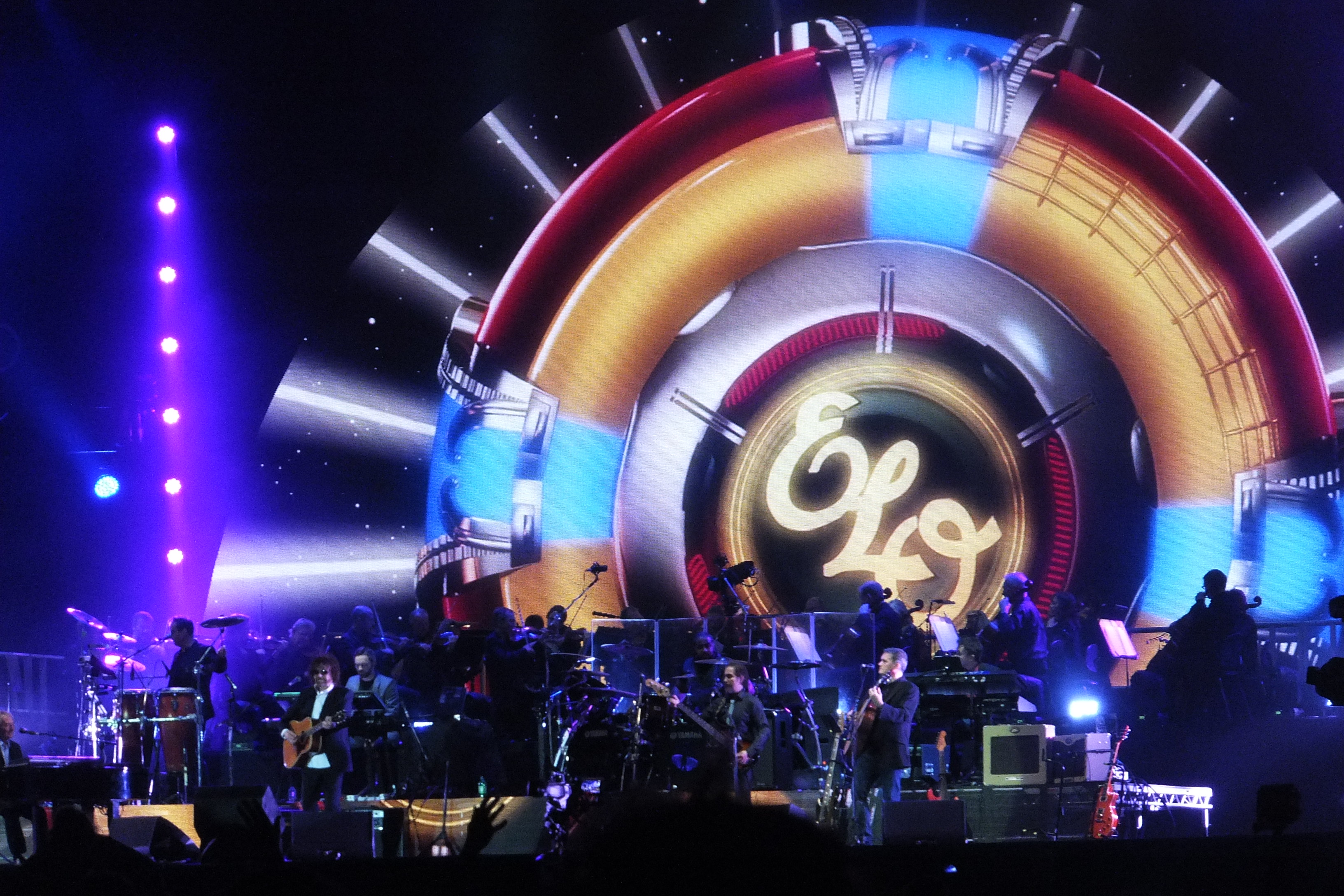 After that, I guess you can pick up their first three albums, No Answer, Electric Light Orchestra II, and On the Third Day, and their mid-’80s work, Secret Messages and Balance of Power, but none of them are particularly essential. No Answer doesn’t even sound like the same band; there’s a lot more emphasis on the strings, and it’s definitely less poppy. I chalk that up to the fact that Lynne wasn’t in charge of the band quite yet (Roy Wood was the driving force initially, but he left after the first album and Lynne took over). Electric Light Orchestra II features ELO’s version of “Roll Over Beethoven,” which is pretty much perfect. On the Third Day starts to sound more like the ELO we know and love; songs like “Showdown,” “Daybreaker,” and “Ma-Ma-Ma Belle” are classics, and their cover of the classical tune “In the Halls of the Mountain King” to close out the album is brilliant.
 Charlie Cottrell